
Where Traders Once Rested: Karle and Bhaje
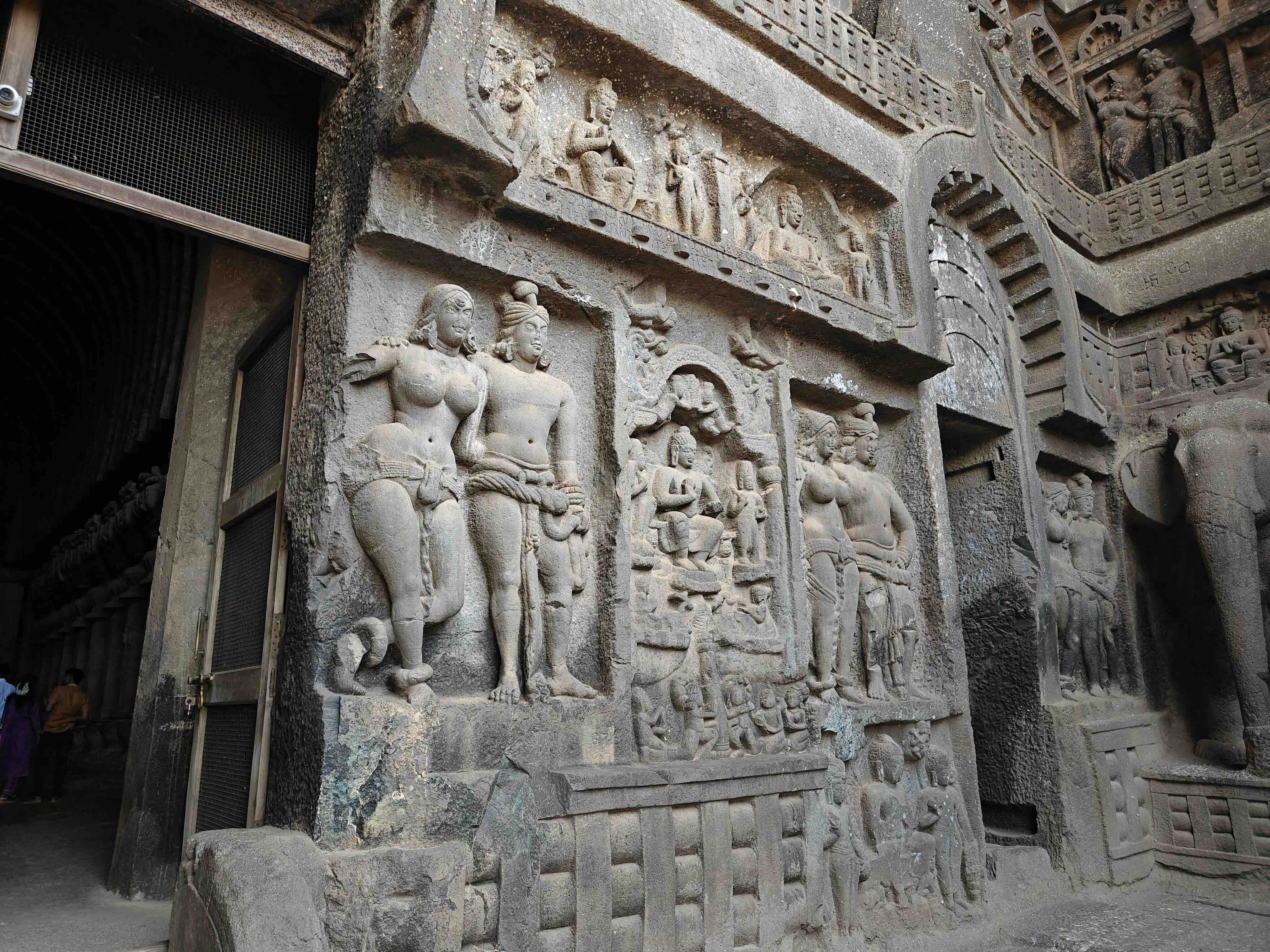
Sculptural Panel at the entrance of the Karle Chaitya Griha at Karle.
I have read about Karle and Bhaje for years in my coursework. Last week, I finally went with a colleague, and standing inside the caves turned out to be a different thing altogether. The 8:35 AM train from Shivajinagar took us to Malavli, a small station with the two sites on either side of it: Karle on one hand, Bhaje on the other. Just a choice of which first. We started with Karle.
Halfway up the staircase, a few stalls serve breakfast to pilgrims. We sat down for pav bhaji and idli, with the steps climbing above us. Then we noticed the men. Local men from the community were going up the stairs on their knees, one slow step at a time, a vow made for a wish or paid off after one came true. Visitors made room without being asked. After that, we stopped feeling like scholars visiting a monument. It is clearly still a place where people come to ask for something.
At the top, the Great Chaitya hall stands right beside the temple of Ekvira Devi, the revered local deity. Bells, marigolds and devotees crowd the shrine, while the ancient hall next door holds a very different silence. Two faiths, two thousand years apart, share one hillside. It is the largest and best-preserved rock-cut prayer hall of its kind, cut from the hill over two thousand years ago. The lion pillar outside, the carved elephants on the capitals, and the teak ribs still clinging to the vaulted ceiling are all there. But the inscriptions were what held us. They name the donors: merchants, officials, even Yavanas, or Greeks, from the town of Dhenukakata. Karle sat beside the old trade route that carried goods between the Konkan ports and the Deccan, and the wealth of that traffic paid for this hall. A faith that preached renunciation was funded by commerce, and the donors chose to be remembered in stone. For a historian, that is rare evidence of who these people were and what they did.
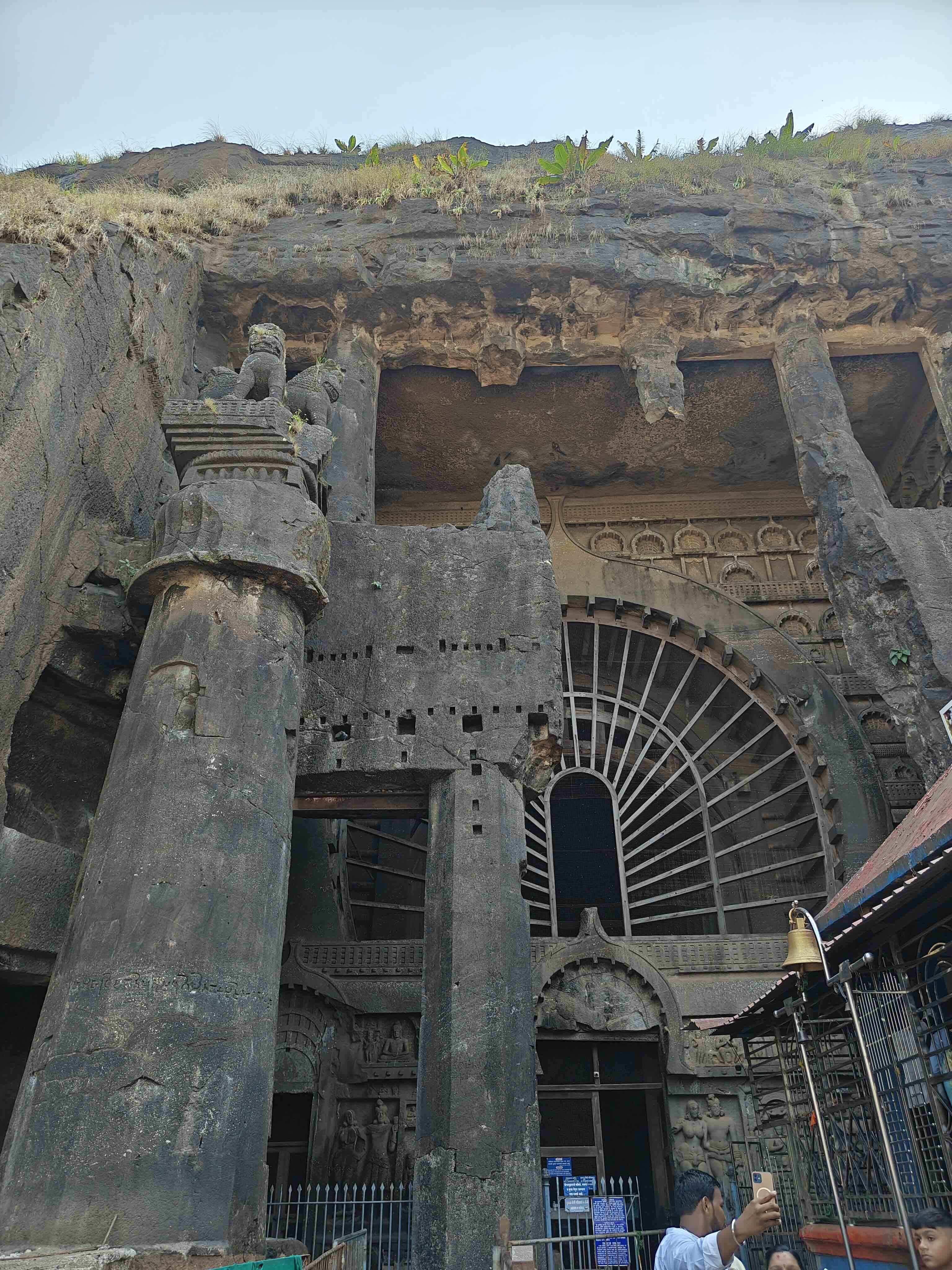
Lion Capital Pillar before the entrance of Karle Chaitya Griha at Karle.
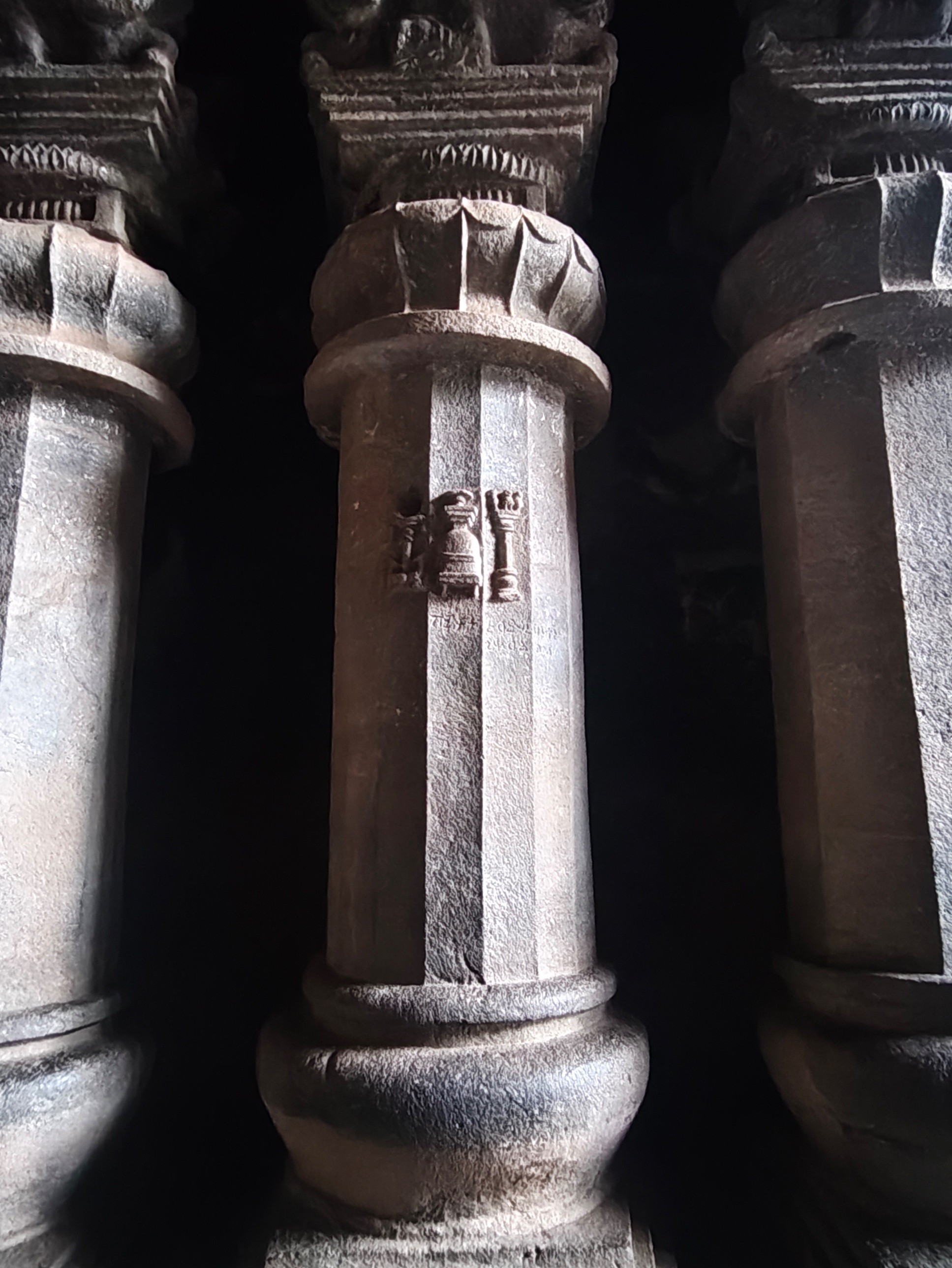
Motifs of Pot with base and lotus and elephant with man and woman on the back (Donor representation) at Karle.
A few metres away from the Chaitya hall, the other caves tell a different story. On the ground floor, we found signs of work that was never finished: rough, unfinished masonry and a sculpture left half-carved, as if the craftsmen had just put down their tools. It made the place feel less like a monument and more like a worksite, interrupted. Upstairs, the first floor held mainly rooms where traders stopped to rest and monks lived, a reminder that this was never only a place of worship. It was also a halt on a busy route. Today, water seeps through the rock there, leaving dark streaks and damp patches across the walls of those old resting places. We have both read about conservation in theory, but seeing an irreplaceable record lose a slow battle to a leak is different. This site survived twenty centuries and may not survive our indifference.
Then we crossed to Bhaje, which is older, from around the 2nd century BCE. The climb is shorter, but the setting is wilder, with the hill dropping away behind us. The main Chaitya hall is plain, with pillars that slope slightly inward, still copying the logic of wooden buildings. In Cave 19, the sun god rides his chariot on one wall and Indra sits on his elephant on another, both softened by time. Nearby, a cluster of small carved stupas marks where monks were remembered. Together these caves show how early this tradition began and how monks lived here beside the same trade routes.
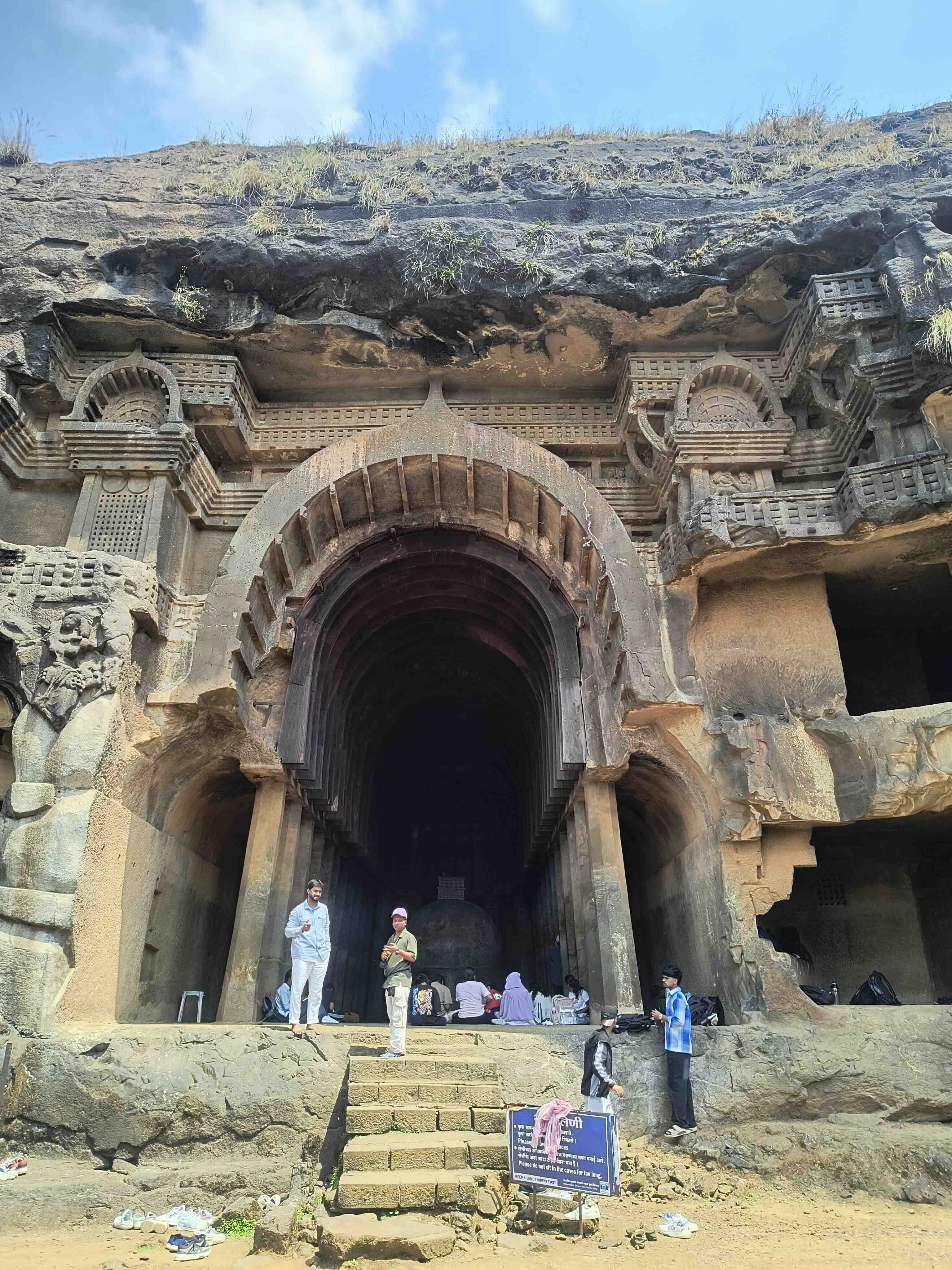
Bhaje caves main chaitya entrance.
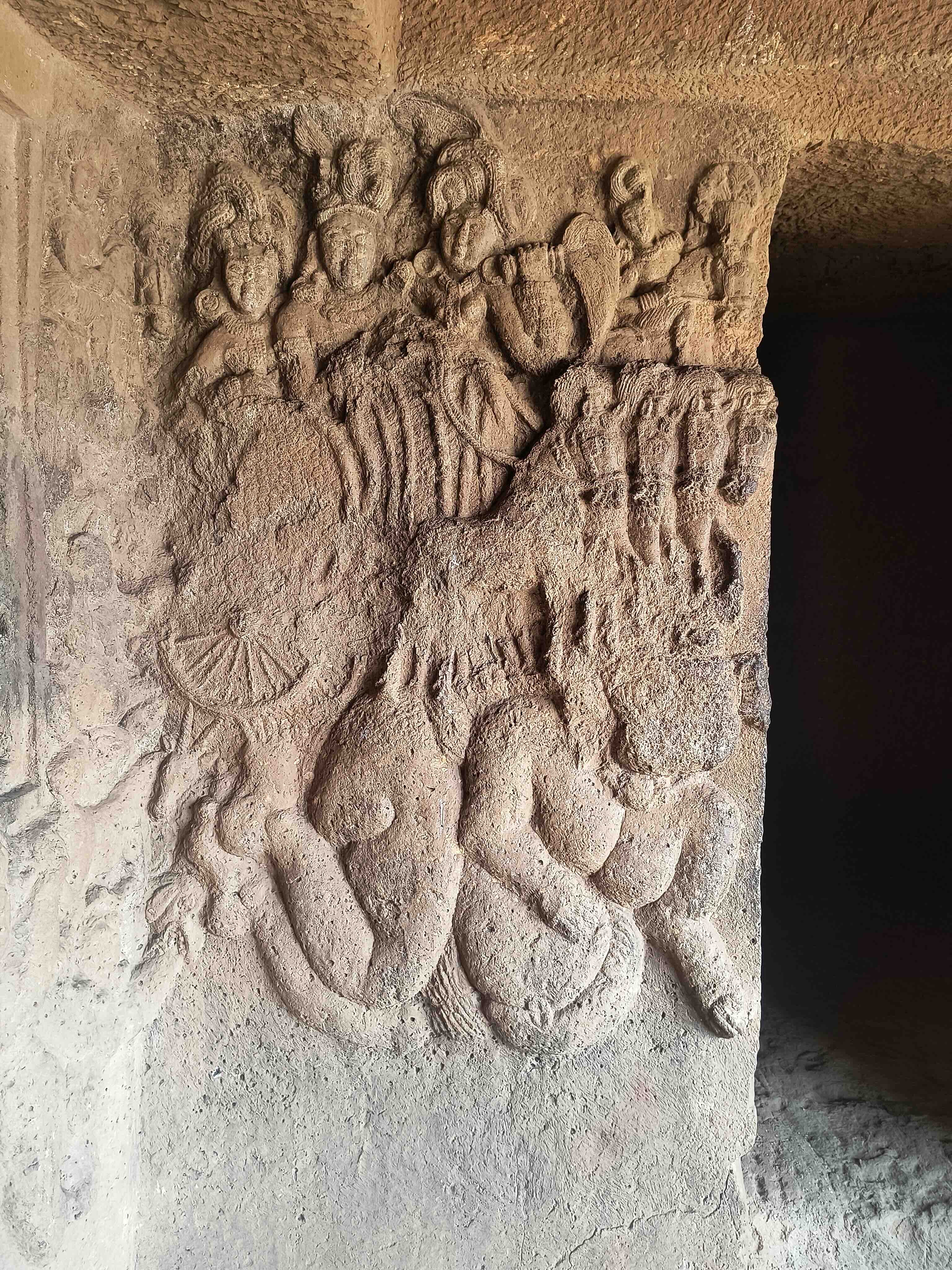
Sculpted mural depicting sun with seven horses at Bhaje.
Inside the Chaitya, a group of art students sat on the floor sketching the pillars and arches. They were silent and absorbed. We stood near them for a while. They were doing what the carvers once did: looking carefully at stone and trying to make something of it. It was the best moment of the day.
On the way down, we stopped on the stairs for nimbu pani, sharp and salty. At the base, we ate hot onion bhajji from a roadside stall, then took the 3:30 PM train back home.
Karle impressed us with its scale. Bhaje stayed with us for its quiet. Both left us with one wish: that we would look after them with the same care that their makers, and the men climbing on their knees, still show.
Editor's Note: All photos by the author.
(Anindya Sanyal is a Doctoral Researcher in Archaeology at the Banaras Hindu University, Varanasi. He has a Master of Arts degree in Ancient Indian History, Culture, and Archaeology, and works on field projects in rock art, human-faunal interactions, and ethnography.)