
What's In a Morning Mail? — Whose Cartoon Is It Anyway?!!
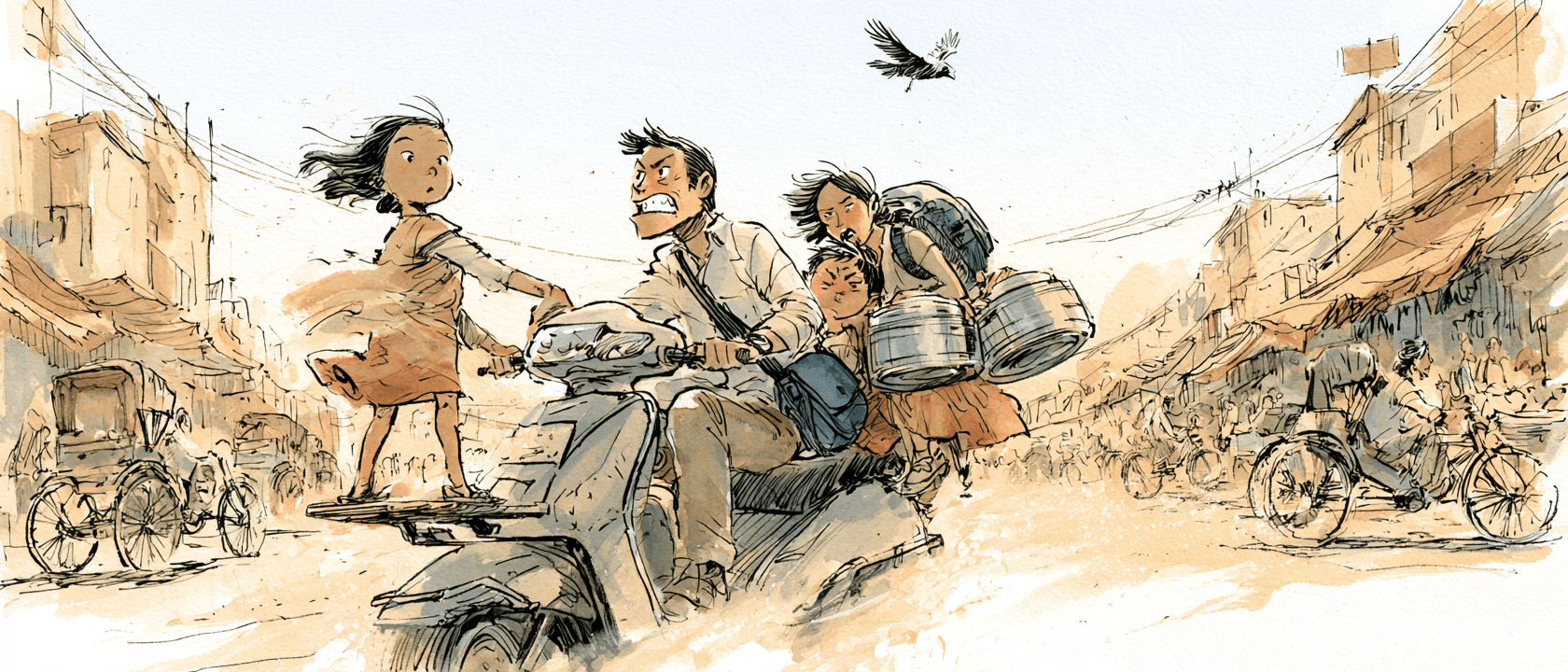
Illustration by the author, generated with MidJourney.
What's In a Morning Mail? Three things, every single day: something from the news, something academic, and something you can put to use. "News" here doesn't mean the headline cycle — it means whatever's genuinely worth knowing about that morning, whether that's an AI funding story, a streaming pick, or a forgotten cartoonist's archive. The academic layer is what gives that news its depth: the history, the craft, the research behind the "what." And the application is the part most newsletters skip entirely — an actual tool, resource, or practice, not just something to file away as read. This is one actual issue of The Morning Mail — the daily letter that normally goes out only to subscribers, unlocked here for a day. What follows is exactly what landed in inboxes on September 22, 2026: an original piece of writing, followed by that day's curated links — a history of Bengali comics, profiles of pioneering Hindi and Marathi cartoonists, notes on Malayalam cartooning, a piece on India's rare female cartoonists, a free cartooning course, and a study of 30,000-year-old rock art. No two issues follow the same shape; some days it's a personal reflection like this one, other days it's a guided discovery or a drill-down on a single idea. The only constant is that it's written fresh every morning and paired with a small, genuinely chosen set of things worth five minutes of your day. If mornings like this sound like your kind of thing, subscribe here — new issues land daily.
Whose Cartoon Is It Anyway?!!
This morning — just fifteen minutes ago actually — I was in a rickshaw heading for a meeting. For about two traffic signals, in the rush-hour madness, there was this family keeping pace with us. It had a little girl fighting for the handlebar with her exasperated father, a little boy who was squished between his father and mother, and the mother was balancing school bags, tiffin bags, the boy and herself. Every time the traffic halted, all of us lurched forward, our eyes met and we grinned at each other — the little girl stopped fighting for steering rights and waved to me, which made the father scold her to keep her hold.
I have seen this real-life situation thousands of times in my life so far. Sometimes I think of safety, comfort, risks, sometimes the scene registers and am neutral but most times I start smiling. There is a common set of observations in such a scene and almost always there is a particular variation that comes from the personality of the family members. But the familiarity in my case comes from the fact that in childhood we lived in Jaipur for a while, and I used to be the one standing on the front footrest since we were also a family of four and sometimes we rode out on a two-wheeler - we used to borrow Madhu uncle's scooter or Tirkha uncle's or Bhatia uncle's motorbike.
Later when we shifted to Bombay (now Mumbai) there was really no need for a family to have their own vehicle since public bus service was quite fabulous. But the family on scooter and bazaar scenes were staples of cartoonists depicting middle-class life in Hindi, Marathi and Bengali magazines like Sandesh, Dharmyug, Grihshobha, Sarita, Chintoo, Shuktara, Chacha Chaudhary among many others that we read in some neighbour's house or the other.
I had the good fortune to meet several cartoonists across the decades (also interviewed some great ones). The way they look at life and living is extraordinary to say the least. What is even more incredible is that many of the observations from the 1950s and '60s have stayed relevant through the ages down into the current age. Like the family on the scooter.
If one were to take even a cursory look at archeological or historical material of any culture in the world, there is a good chance that we may see similar continuity in many aspects of town planning, architecture, art, and everyday living across millennia and centuries.
Human beings are after all creatures of habit.
Below: a history of Bengali comics, a broader look at cartooning as a form, profiles of Pran Kumar Sharma, Abid Surti, Mangesh Tendulkar and S. D. Phadnis, notes on Malayalam cartooning, a piece on India's rare female cartoonists led by Kanika Mishra, a free course if you want to try your hand at it, and the one that set off this whole train of thought — a study of prehistoric rock art. Those cave paintings at Chauvet, animals drawn with extra legs and stacked heads to suggest motion, are more than 30,000 years old — visual storytelling techniques that predate the written word by tens of thousands of years, not language itself, but old enough. The scooter family and the bison mid-stride are doing the same thing: freezing a moment of motion so someone else, much later, immediately gets it.
Psst: the cartoon at the top — the idea, the scene, the argument between father and daughter, the punchline — that's mine. MidJourney rendered it. Claude helped me get the prompts right. So: whose cartoon is it?
That's it for today then. See you tomorrow!
That's a single morning. If this is a pace you'd enjoy waking up to, subscribe to The Morning Mail.
science.org
science.org
Cartooning - Illustration History
illustrationhistory.org

An exhibition has brought to life the colourful history of (mostly black-and-white) comics in Bengal
The Comics Culture Collective’s show was an overview of the evolution of Bengali comics.
Scroll.in
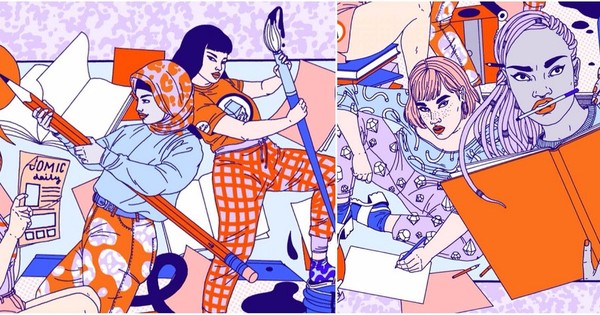
Meet the three Indian comic book artists on the global 100 list (and one who isn’t)
Paul Gravett, the curator of ‘Comix Creatrix: 100 Women Making Comics’ explains his choices.
Scroll.in
India's first cartoon everywoman is the product of a female cartoonist who stood up to her own critics - The World from PRX
Kanika Mishra had had it with the folksy 'common man' character so prevalent in Indian cartoons. She decided to create a 'common woman' and named her character Karnika Kahen which literally means 'Karnika speaks.' And speak she does, taking stands against sexual abuse and rape in India, and getting a lot of flak in the process.
The World from PRX
637 e_p_Unny, Cartooning chartbusters
india-seminar.com
Cartoons in Malayalam Magazines - The Kerala Museum
The Kerala Museum

In conversation with Pran Kumar Sharma- The Legend of Indian comics
Whenever I would pick up a Chacha Chaudhary comic book in my childhood, there was this one face that I had gotten very familiar with apa...
burnighbright.blogspot.com
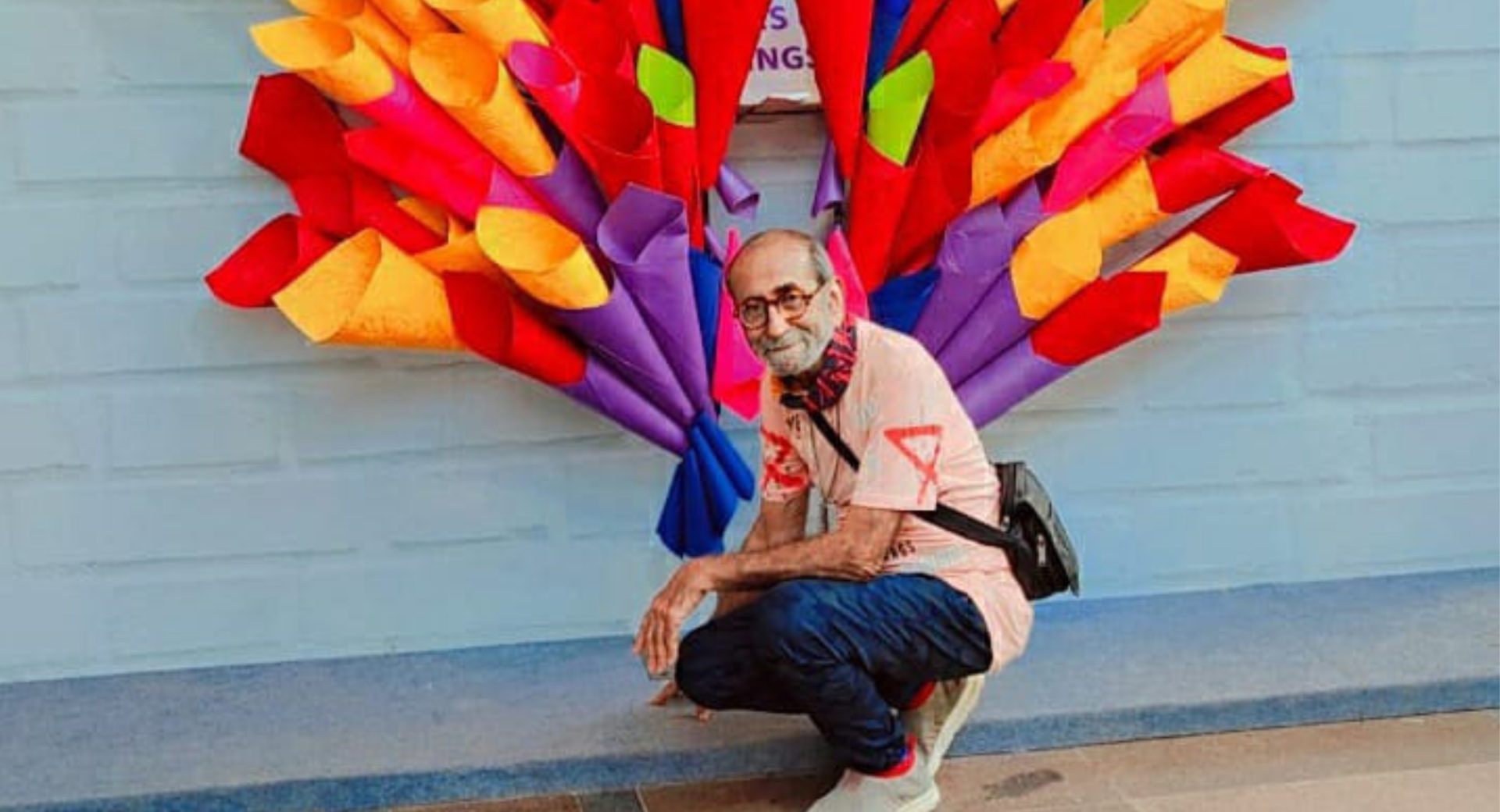
Creator of popular Indian cartoon character ‘Dhabbuji’ and social worker, Abid Surti, turns 88 - The Australia Today
The satirical cartoon ‘Dhabbu ji’ was published continuously for 30 years in the prestigious ‘Dharmyug’ magazine.
The Australia Today - Multicultural Voice

Pune Legend Spent 18 Years Handing Out Cartoon Postcards to Citizens
Mangesh Tendulkar, a Pune legend spent almost 18 years handing out cartoon postcards to citizens in order to instil a sense of road safety sense in them.
The Better India
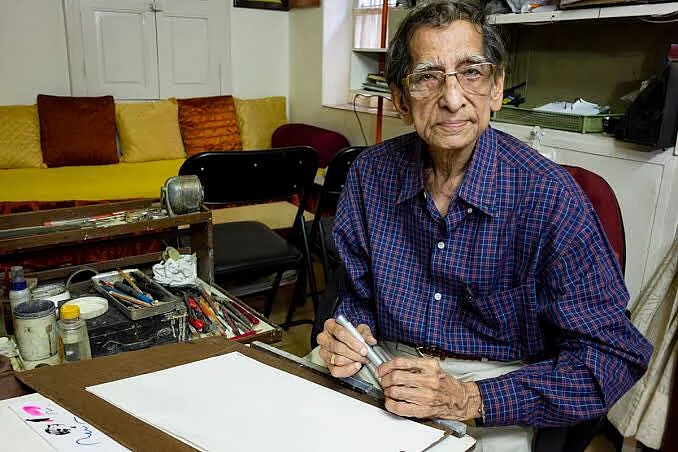
J J Art School Graduate, Cartoonist SD Phadnis Turns 100! Celebrating a Century Of Art & Visual Storytelling
Veteran cartoonist Shivram Dattatreya Phadnis, affectionately known as S D Phadnis or ‘Shi Da’, marks his 100th birthday on July 29, 2025. Born in Bhoj village in Belgaum district in 1925, Phadnis has been an influential force in Indian cartooning, particularly in Marathi-language publications.
Free Press Journal
Online Course « The Center for Cartoon Studies
cartoonstudies.org