
Unattended by Design, Defended by Habit
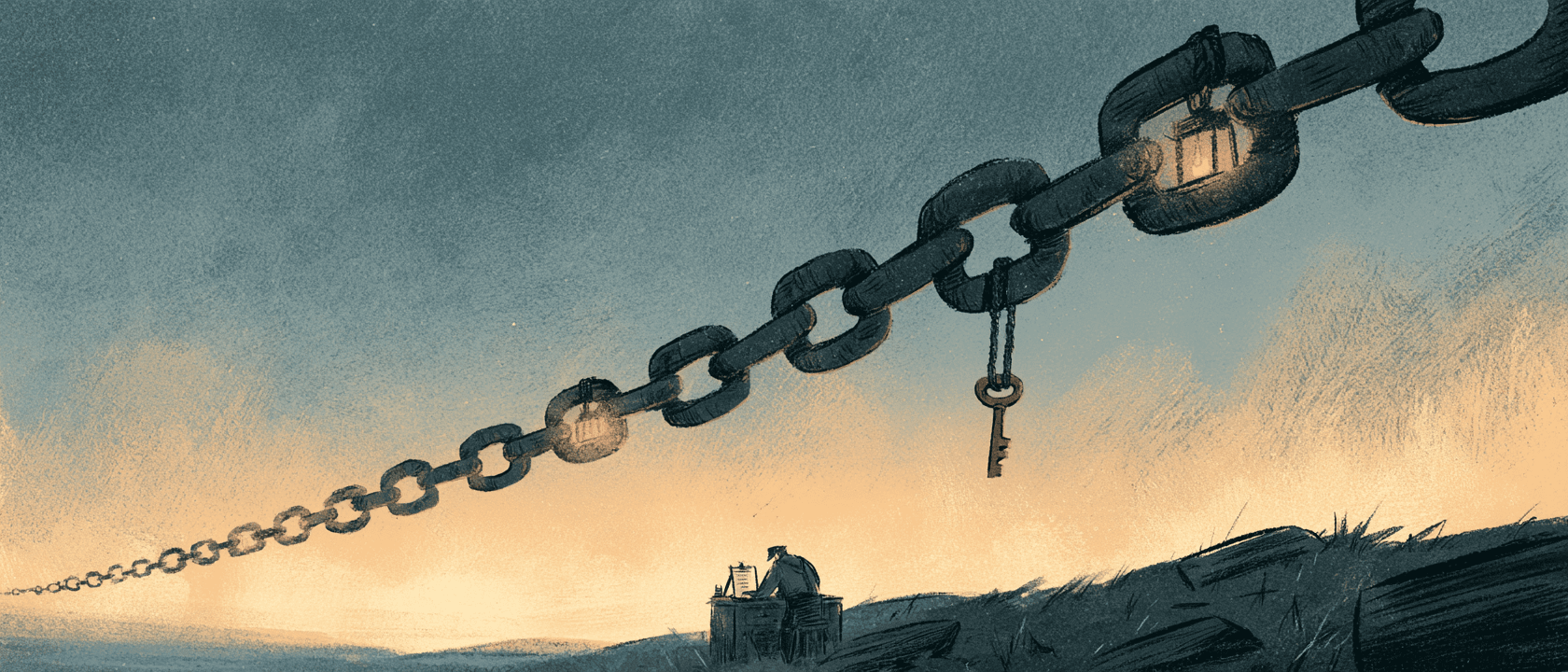
Every link in the chain can be attacked. The key left hanging on one of them is the builder's to remove.
What building on AI cloud platforms cost one solo founder, and what kept it from costing more
This October, AI infrastructure billed me for something I did not intend. The loss was small. It could have been large.
I found $73.54 of usage on an Anthropic API key I had created on 14 January for a product I had since stopped running. All of it was on 21 October (UTC), it used up my entire prepaid balance, and $64.09 of it was on claude-opus-5-5, a model none of my products call. The rest was spread across three older Opus models. Anthropic disabled the key. Railway, where I host my products, disclosed a breach of its own systems that same week, and I cannot prove where the key was taken.
What kept it small was a habit, not a feature. I pay by prepaid credit, keep balances low, and never enable auto-pay. I started this by instinct when I began building with AI, because I could see that AI infrastructure can cost a great deal even when you have no customers. This article is about why that instinct was right, what else mattered, and what I still have to do.
My argument has five parts. Bad actors are always working to attack. An attack can land at any link in the chain between a builder and a model. Because the chain is interdependent, every entity in it needs a process that is lawful, fair to legitimate customers and thorough in investigation. The user has very little part in that process. And the user does control their own workflows, which is where the effort belongs.
Unattended is the product
Nobody builds on AI cloud infrastructure in order to approve each step. A workflow that needs a person at every call has no business case, and the platforms know it. What they sell is automation, and the billing is automated to match. Railway's terms let it submit periodic charges, including when usage reaches a threshold, without further authorization until the customer gives notice. Anthropic's Console offers auto-reload, which buys more credit automatically when the balance falls below a threshold the customer sets.
The bounds differ from platform to platform. AWS's own documentation says that Budgets data is updated up to three times a day, and that you might incur costs that exceed a budget threshold before a notification arrives. Google's documentation describes spend cap budgets under which usage of the specified services is automatically paused once the cap is enforced. The customer chooses that option instead of alerts-only when creating the budget, it covers only a short list of services (the Gemini API, Vertex AI, Cloud Run and Cloud Run functions), and enforcement is not instantaneous. Anthropic ships a default: each of its Start, Build and Scale tiers carries a monthly spend cap of $500, $1,000 and $200,000, after which API usage pauses until the first of the next month. The page states no cap for the Evaluation tier or for Custom accounts. The customer can also set a lower organisation limit and per-workspace limits in the Console. I moved up from a lower tier to get the limits my products needed, and the monthly cap rose with the tier. My organisation's cap is now $200,000 a month, which is no ceiling for a solo founder. I have not set a monthly limit of my own in the Console. I can, and it would add a second ceiling that does not depend on the size of the balance.
So automation arrives by default, and protection is a mixture: a default cap on one platform, a setting you must find on another, and on the two I read in detail a delay between the spend and the stop. That is my analysis, not a finding from any source. With auto-pay on, this incident would have been open-ended. My cap was the balance.
Bad actors work every link
Three platforms disclosed security incidents within about two weeks this October: Zeabur, Railway and Fireworks. Each has since published follow-up reports, including Railway's full report and Zeabur's follow-up. Their causes differ.
Railway's full report says AI provider keys were the primary target, and its compensation bulletin sets out a policy for each of several AI providers. For a buyer, that means a platform breach turns into spend at whichever labs the compromised keys belonged to, and each lab's own policy then decides what comes back. That is my analysis.
The platform exposed what it stored. Nothing in my code or my architecture could have prevented that. What was in my control was whether a dormant key was sitting in that storage at all, and what a stolen key could cost.
This is not only a Railway problem, and it is not only a problem of newer platforms. Microsoft's Digital Crimes Unit has described a network it tracks as Storm-2139, whose members used exposed customer credentials scraped from public sources to gain unauthorized access to generative AI services. Google's Cloud Threat Horizons report for the first half of 2026 says that in Mandiant engagements from the second half of 2025, threat actors exploited identity issues to gain initial access in 83% of the incidents involving major cloud and SaaS-hosted environments.
What these reports show is not a new kind of attack. Stolen credentials have long been used against cloud accounts. What has changed is the target. An AI key converts directly into model usage billed to someone else, and in Railway's and Zeabur's reports the attacker is described as looking for exactly those keys.
A workload runs through a chain: a hosting platform, an AI lab, often an infrastructure provider as well, and the buyer holds a relationship with each. An attack can happen at any link. In my case it was probably the hosting platform, with the usage billed by the AI lab. Fireworks's second incident shows another link, a platform breached through a provider it depends on. Tomorrow it could be at the lab or at an infrastructure provider.
This is why security vigilance is a personal and organisational responsibility, and cannot be left wholly to the platform. Bad actors attack systems constantly. Whoever profits from a breach, the loss lands on the user. The incidents above are the visible part of that. A platform defends its own systems. The buyer still decides what is stored where, how long a key lives and how much it is allowed to spend. That is my analysis.
Every link needs a process
Because the chain is interdependent, how each entity responds to an incident is a process, and the process has to do three things at once. It has to stay within the law. It has to be fair to the customers whose claims are legitimate. And it has to investigate thoroughly enough to tell a legitimate claim from one that is not. That is my analysis, and none of the three is simple at the scale of an incident that touched up to 100,000 workspaces.
What I saw were companies following such processes in the open. Railway published a preliminary report, a full report and a compensation bulletin that sets out how affected customers are compensated, with a stated policy for each listed AI provider.
Anthropic disabled my key. Railway's full report says that from 09:25 UTC on 21 October it asked Anthropic and other providers to revoke potentially compromised keys. The disabling may have followed that, or Anthropic's own detection, and I cannot tell which. Railway's reports describe the keys being taken from Railway's systems, and nothing I have points to a breach at Anthropic. That is my reading. What I saw in both cases was a company choosing to act and to publish how. That is my analysis.
A process also needs the means to carry it out. Zeabur's follow-up shows the other end: a platform that has told its users the fault was its own, and that cannot pay. Recourse after a breach depends on what the platform can afford and chooses to do. The standing contracts say something different.
The contracts I read put responsibility for account activity on the customer. I have read platform terms and licence agreements since 1996, and I read every update. Anthropic's Commercial Terms say the customer is responsible for all activity under its account, and limit Anthropic's liability to the fees paid in the previous 12 months. Railway's terms say the customer is responsible for any activity associated with its account, require the customer to indemnify Railway for claims including actions taken by a third party using the account, and cap Railway's liability at the greater of $100 or the amounts paid or payable in the previous 12 months. AWS's Customer Agreement makes the customer responsible for all activities that occur under its account, regardless of whether the activities are authorized by the customer, except to the extent caused by AWS's breach of the agreement. Google's billing documentation says it reviews such cases on an individual basis and that charges incurred during the lag before termination are valid. I have read the AWS and Google texts only for these points. This is a reading of the text, not legal advice.
Applied to my case: I pay Railway about $20 a month, so on my reading its cap is about $240, and my $73.54 sits under it. Anthropic's credit terms say credits are "non-refundable" and "have no cash value," and I found no exception on that page for unauthorized use. Its help article on a suspected compromised key tells the customer to revoke the key immediately and contact support, and does not mention refunds or who bears the usage. The contracts set the default. What a customer actually recovers after an incident is decided by each company's process, and that is why the process matters.
The user's place in the process
As a user, I have very little part in any of this. I can revoke a key and report the usage. I cannot see or steer the investigation, and where a platform runs a claim process, I can only use the route it provides. A process built for a large number of affected customers cannot hold a conversation with each. That is my analysis. It is also the reason the rest of this article is about what a user controls.
What I control
In the whole sequence, one thing limited my loss to $73.54: my own policy of prepaid credit, so the balance was the ceiling. The usage ran from 08:00 to 15:00 UTC on 21 October. Anthropic's notice that my access was off because my credits were exhausted is stamped 8:11 PM IST, which is 14:41 UTC, so the key was in use until the balance ran out. Railway says it asked Anthropic and other providers to revoke potentially compromised keys from 09:25 UTC, but my key was still being used for hours after that. Railway's own actions, including evicting the attacker, closed the platform side, but the keys had been read before that, and what was done with them afterwards went through Anthropic's API. So the time the lab disables a stolen key decides how long it can be used, and I cannot establish when mine was disabled. What I can say is that a larger balance would have kept the usage going past 14:41 UTC, and my tier's cap of $200,000 a month would not have stopped it. That is my reasoning from the policy, not a figure from any source.
The habits were these. Prepaid credit only. Small balances. No auto-pay. Separate keys for separate products. It worked, in that the loss stopped at the size of the balance.
The incident also showed me the habit I lacked. The key that was used had been created in January for a product I had stopped running. The Railway service that held the Auditor product had produced no logs since January, so no legitimate process of mine was running on it. The usage came in a burst on one day, on models my products do not call. Those facts point away from my own code and toward theft. They do not show where the key was taken. But a dormant key is a standing liability wherever it is stored, and I left one live for about nine months. This is the housekeeping a builder owes the system: revoke a key when the product that used it stops, rotate keys after any disclosed incident, set a spending limit wherever the platform offers one, and check usage after an incident rather than waiting for a bill. The one of these I have not done is the monthly limit in the Console.
The other thing a builder owes is literacy. Users and organisations are responsible for understanding the security risks and the legal responsibilities of what they build on, so that their own policies can address them. Preparation and some awareness gave me the policies that kept this loss small. They were not enough to catch the dormant key. Threats and risks change daily, and I need to do better.
There is a cost. An empty balance has stopped my own products mid-test. A ceiling that caps my losses also caps what I can build and what I can promise a customer. Protection of this kind is paid for in availability.
The chain will be attacked at some link, and I do not control which. I control how much a stolen key can cost, how long an unused key stays alive, and whether I learn the terms before I need them.
Sources
Railway, preliminary report (Oct 2026): https://blog.railway.com/p/preliminary-report-october-security-incident
Railway, Incident Report: October 21st Security Attack (10 Nov 2026): https://blog.railway.com/p/incident-report-october-security-incident
Railway, Bulletin: Compensation for unauthorized AI usage (12 Nov 2026): https://blog.railway.com/p/bulletin-compensation
Railway, Terms of Service (effective 2026-04-20): https://railway.com/legal/terms
Anthropic, Commercial Terms of Service: https://www.anthropic.com/legal/commercial-terms
Anthropic, Supplemental Credit Terms: https://www.anthropic.com/legal/credit-terms
Anthropic, Rate limits and spend limits: https://platform.claude.com/docs/en/api/rate-limits
Anthropic, How do I pay for my Claude API usage?: https://support.claude.com/en/articles/8977456-how-do-i-pay-for-my-claude-api-usage
Anthropic, What should I do if I suspect my API key has been compromised?: https://support.claude.com/en/articles/8384961-what-should-i-do-if-i-suspect-my-api-key-has-been-compromised
AWS, Customer Agreement: https://aws.amazon.com/agreement/
AWS, Managing your costs with AWS Budgets: https://docs.aws.amazon.com/cost-management/latest/userguide/budgets-managing-costs.html
Google Cloud, Manage spend cap budgets: https://docs.cloud.google.com/billing/docs/how-to/budgets-spend-caps
Google Cloud, Resolve Cloud Billing issues: https://docs.cloud.google.com/billing/docs/how-to/resolve-issues
Fireworks, October 2026 security incident (with 9 and 17 Nov updates): https://fireworks.ai/security/bulletins/october-2026-security-incident
Zeabur, October 2026 security incident (preliminary report, 19 Oct): https://zeabur.com/blogs/october-2026-security-incident
Zeabur, follow-up on the October 2026 security incident (28 Oct): https://zeabur.com/blogs/october-2026-security-incident-follow-up
Microsoft, Disrupting a global cybercrime network abusing generative AI: https://blogs.microsoft.com/on-the-issues/2025/02/27/disrupting-cybercrime-abusing-gen-ai/
Google Cloud, Cloud Threat Horizons Report H1 2026: https://cloud.google.com/security/report/resources/cloud-threat-horizons-report-h1-2026
Sanjay Mukherjee is the founder of Eduriti, an AI-native product studio, and editor of The Learning Equilibrium. He has spent 34 years across journalism, instructional design and L&D consulting, including 12 years in core operational roles before moving into learning technology. He has served as Vice President, COO and Chief Strategy Advisor for global eLearning companies and currently consults in Fractional Strategic Advisor roles. He is the author of Talking to Claude and other AIs (2025) and is based in Pune, India.