
The Morning, Overheard
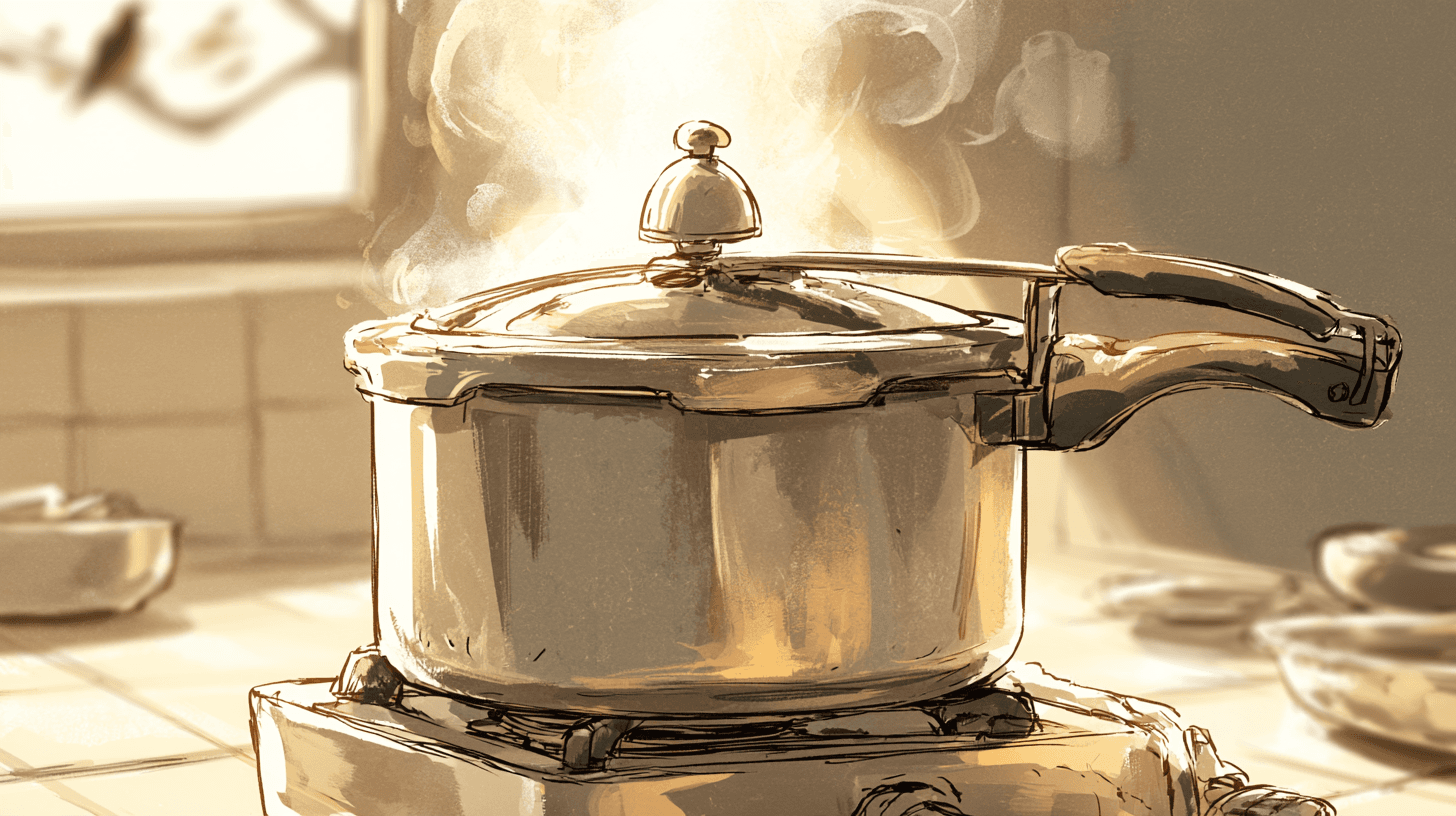
Illustration generated with MidJourney.
A Sunday, sometime in the late eighties (Andheri, Mumbai, India).
I am seven, and I am not getting up.
It is still dark enough that the window is only a grey square, and the first bird in the neem tree tries a note, waits, tries it again. A second one answers. By the time I have decided to keep my eyes shut, the whole tree is arguing. Somewhere further off a koel asks its two-syllable question of nobody. The fan turns above me at speed two, which is my speed, and Sunday is the one morning when the day comes to me instead of the other way around.
The house starts up in its usual order. The bathroom bucket goes under the tap and the water begins to climb, the pitch rising and rising until my Pappa shuts it off at exactly the right moment, the way he always does. Then the cooker clears its throat and lets out one long, offended whistle. Mum is counting under her breath in the kitchen. Rice steam comes down the passage, warm and starchy, and then something sharper cuts through it — mustard seeds cracking in hot oil, curry leaves going in with a hiss — and my stomach wakes up before the rest of me does.
Then the bell, small and brass and insistent, from the corner where the gods live behind a curtain of sandalwood smoke. And then, from two floors below, the shankh.
It comes up through the floor. It comes up through the mattress, through my back, into the place behind my ears, and I stop moving entirely. It is the uncle on the fourth floor, who is otherwise an ordinary man with an umbrella and a scooter, and every Sunday he does this one enormous thing and the whole building holds still for the length of his breath. When it ends, I am still lying there, listening to the end of it. Camphor reaches me a second later — cold, clean, slightly frightening, the way certain holy things are.
Outside, the light arrives and finds the lane already working. The milk van wheezes to a stop below the balcony and the crates come down in a clatter of glass, bottles knocking each other, foil caps catching the sun, somebody counting out loud. A gate complains on its hinge. The newspaper hits the door with a flat thud. A broom moves across the courtyard in dry, patient strokes. The vegetable woman calls out her tune, which has no words left in it, only melody. Downstairs, phenyl goes across a floor and the whole building briefly smells like school.
Mum comes with warm coconut oil on her fingers and mogra in her hair, and there is no negotiating this part, so I let her. Somebody turns on the television. The Rangoli tune starts up, tinny and unmistakable, and two floors of the building hum along without admitting it.
None of it was arranged. All of it arrived on time.
The cooker is electric now, and it beeps. Milk comes in a carton, left at the door by someone who has been asked not to ring the bell. The newspaper is a red dot on a screen. Somewhere, I am sure, a child is lying in bed on a Sunday morning, and the room is very quiet, and there is nothing yet to wake up to.
Editor's Note: The author conceived this article from her lived experiences and drafted it with assistance from Claude, using her own inputs and reflections.
(Kanchan Shine is a daydreamer with a notebook. She reads more than is sensible, watches people slightly longer than is polite, and has never lost the habit of asking how a thing works — or when it quietly stopped working that way. She's an author and former entrepreneur, now serving as Chief Learning and Innovation Officer for Hurix Digital, where her weekdays go to learning design and artificial intelligence. She's also the author of Sticky Learning: From A to Z. Here, she's off duty — writing about whatever she's noticing at the moment.)