
Site Is Down
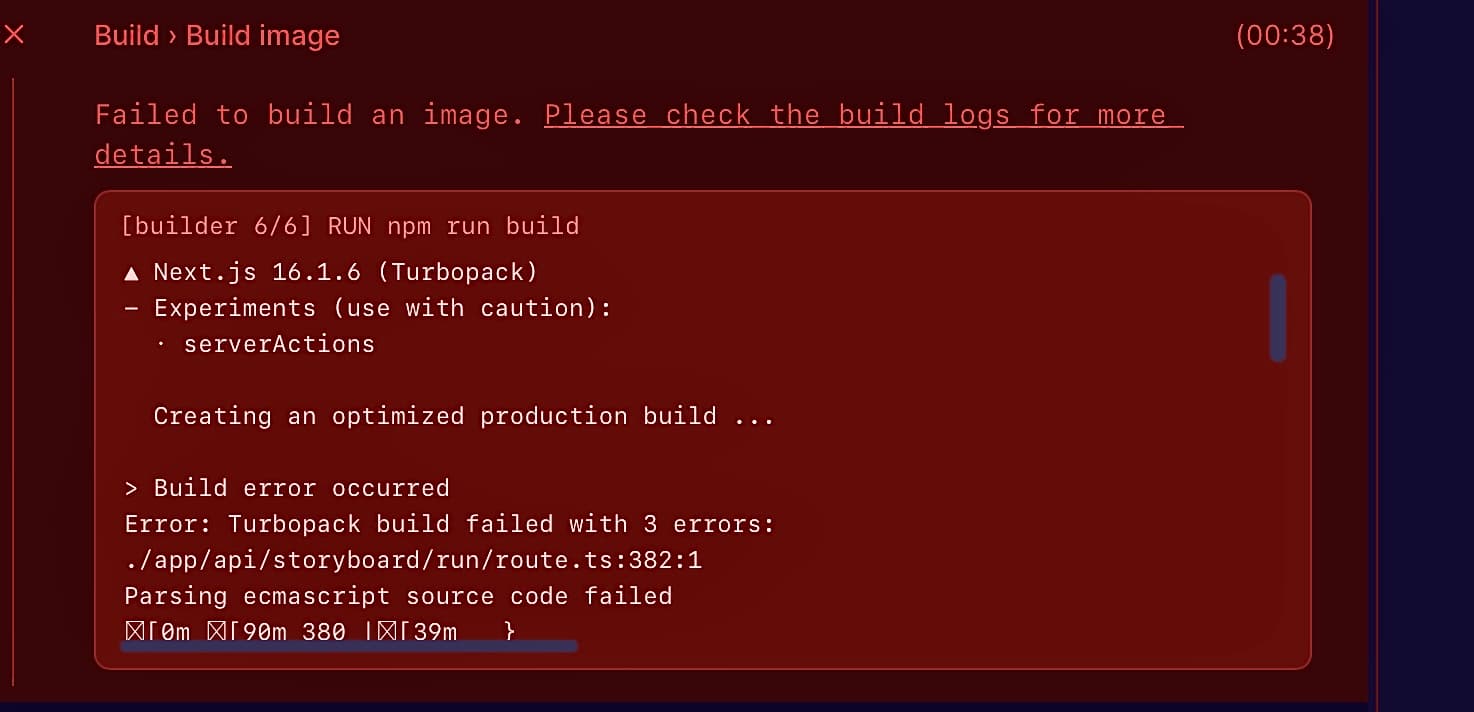
The error message was precise. The cause was a single missing closing brace.
Late-stage failures in complex systems are rarely dramatic. They are microscopic.
Yesterday, a production build failed.
The error message was precise:
- A
console.logplaced outside the loop body. - A missing closing brace before that call.
- A
tryblock that never closed. - The parser reaching end-of-file still searching for structural balance.
One missing }.
But it did not appear out of nowhere. It crept in.
Multiple surgical changes had been made to enhance the output format. New variables introduced. Dependencies mapped. Logic reshaped carefully to preserve existing behaviour.
It was, in hindsight, a minor miracle that routes and overall architecture did not break.
The structural fault was tiny. The surface area of change was not.
From a systems perspective, this is instructive.
Compilers enforce symmetry. Control structures demand closure. Every opening brace implies responsibility.
But human optimisation does not operate that cleanly.
When multiple micro-adjustments are layered into a stable system, cognitive load increases. Attention narrows. Local correctness is verified. Global balance is assumed.
That assumption is where imbalance enters.
Seven deployments. Six rollbacks.
The system itself was stable. Launch-ready. Solving the core problem.
The intervention was not corrective. It was enhancement — an attempt to move from adequacy to polish.
In complex systems, late-stage optimisation carries asymmetric risk. Small syntactic shifts can destabilise validated flows because they modify structure while preserving intention.
The technical lesson is simple: structural integrity matters more than aesthetic refinement.
The cognitive lesson is harder: restraint is a systems skill.
A missing brace is not merely a syntax error. It is imbalance made visible.
In programming, imbalance stops execution immediately.
In product development, imbalance manifests as volatility — frantic redeployments, reactive fixes, unnecessary exposure to risk.
The principle generalises:
- Stability has value.
- Timing has consequence.
- Incremental enhancements compound complexity.
- Optimisation without constraint destabilises systems that already work.
Every { must have a }.
Not just in code.
In design. In architecture. In judgement.
The platform is back up.
The enhancement remains undone.
That may be the more disciplined state.