
Re-skilling is not the answer
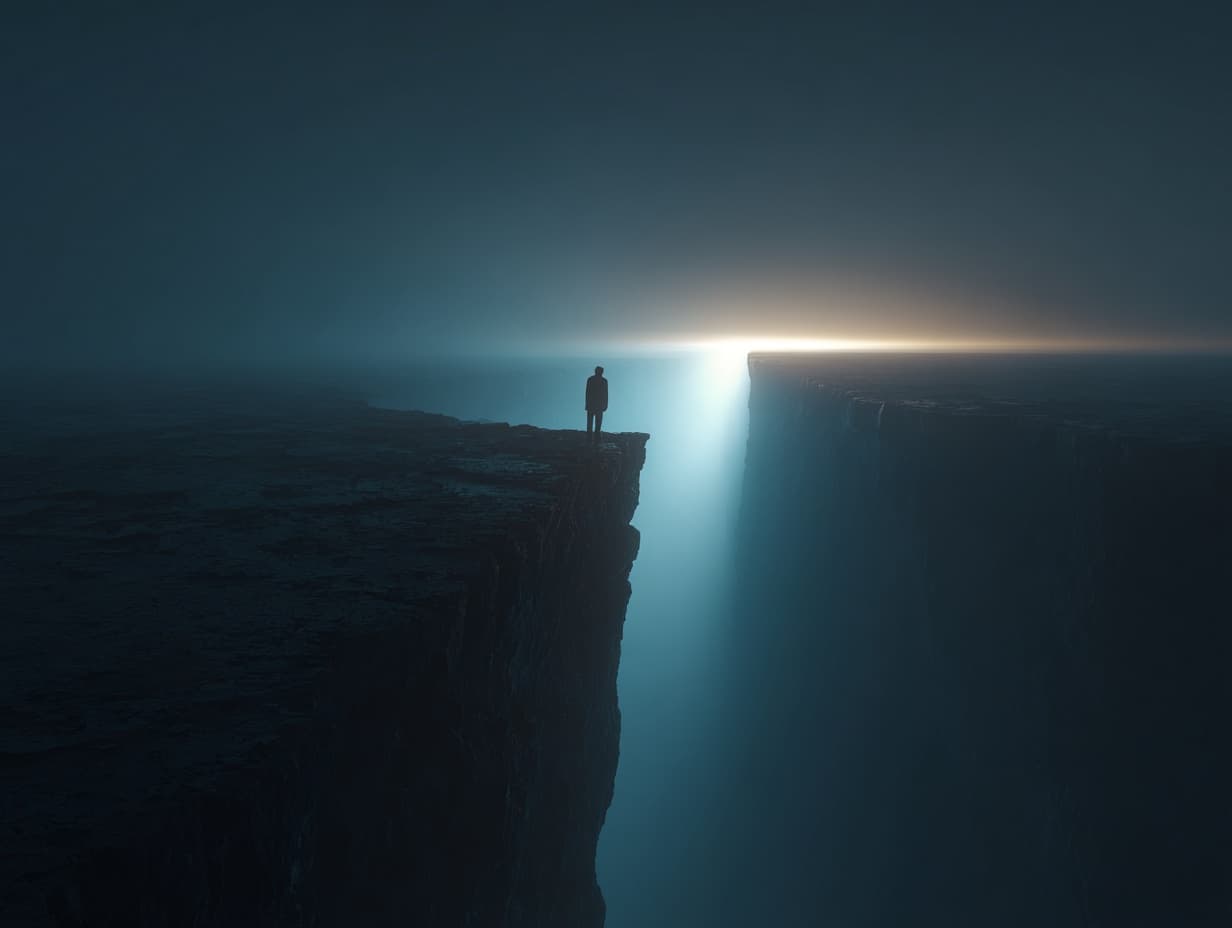
The edge is not the end, but one has to find a bridge.
The evolution of Generative AI has created a void and an abyss.
A void because there is no corresponding evolution of method to harness the capabilities of AI nor make people learn fast enough to collaborate with the technology.
An abyss because this is only the beginning. Throughout history, when nations conquered other nations, when technologies emerged, when new trade routes were developed, masses of people slid into varying degrees of destitution. The cause was displacement, loss of value of existing trades, crafts, knowledge and skills. Families that were affluent became not so affluent, those that were not so affluent became economically challenged, the economically challenged slid into poverty and those in poverty went under. And this happened because we always embrace and force everyone to embrace the rule of one: homogeneity. The age of computers that lasted approximately half a century decimated psychomotor and knowledge skills that had taken millennia to evolve. We are at the beginning of exactly such a cycle now. The difference is important to understand: This is simultaneous, across all industries, geographies, skills, knowledge, et al.
The Stone Age lasted 3.4 million years. The Bronze Age, roughly 2,000. The Iron Age, around 800. Every great transformation in human civilisation has had the mercy of time. The great religions rewired entire cosmologies, moral frameworks and knowledge systems over centuries. The Indian Ocean trade networks — connecting the Far East, Africa and Europe with India at the centre — evolved over nearly two millennia, expanding local economies into a global network across generations. The Age of Print dismantled knowledge hierarchies and rebuilt them differently over roughly 200 years. The Industrial Revolution compressed that to 80. Computing took 60. Mobile technology, 15. Generative AI has fundamentally altered the nature of knowledge work, creativity, analysis and human value in under two years. Every previous rupture, however brutal, gave civilisations time to adapt and reconfigure. This one has not. There is no buffer. There is no generation that gets to retire before the storm arrives.
Quite simply: people are now redundant in digital business or in segments of industry that rely on digital processes. You may still have a job or maybe doing work that you may think is important but it is just a matter of time before the impact of Gen AI touches your function, industry and world.
This awareness and acceptance is the starting point of transforming one self. Over the past two years, many professionals, entrepreneurs and consultants have been sharing their thoughts and asking me for my thoughts on where I think the world is headed, what is the future of skills, how can we help teams and companies transform themselves?
I don't know.
But what I do know is that the future is not in re-skilling people or up-skilling people because those are solutions when skills are a gap and when people are necessary for work.