
Human Intelligence: A Guide to Somewhere, Far Far Away, But Very Close
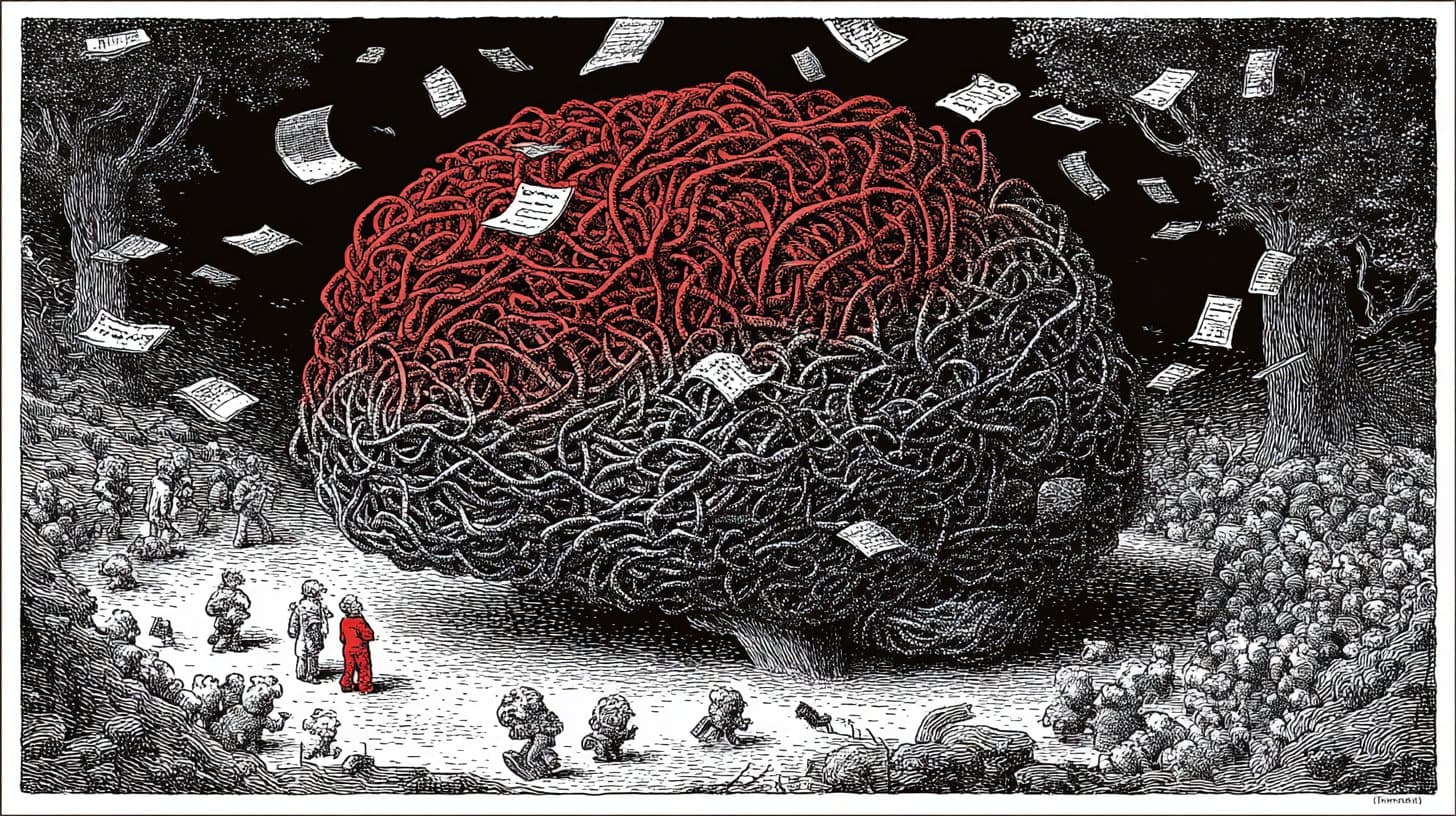
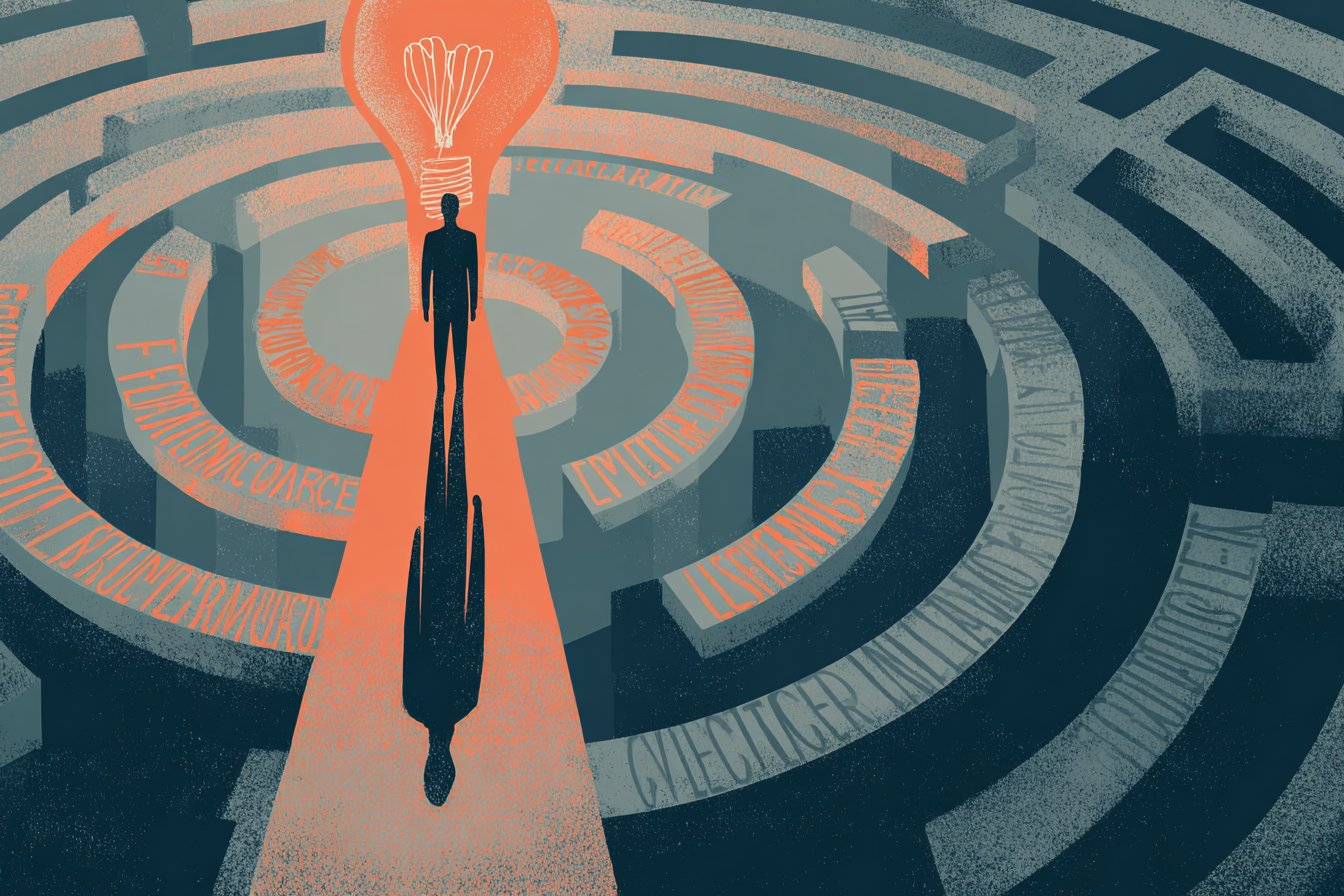
Human intelligence at scale. Artist: Midjourney / thebengali.
The views expressed in this article are probably solely those of the author, who may be of the mind to assert every moral right to be identified as such, unless there is a possibility of repercussion, in which case the work may be anonymously authored by the said named author in their personal or impersonal capacity. The views may or may not represent or reflect the views, opinions, or positions of the author and this publication, its editorial board, its owners, or any affiliated organisations. Unless they do. Or don't. The author is solely responsible for the accuracy of any facts and/or figures herein. Unless there aren't any. To be precise and clear, this is a work of satire.
Human Intelligence is the biological phenomenon that enables humans to build systems that can perform tasks by employing skills and cognition — perceiving, reasoning, learning, deciding, and generating — of humans, machines, and other living beings. It is not a single process or technology but the creator of all layered disciplines, including but not limited to mathematics, statistics, linguistics, neuroscience, philosophy, humanities, cooking, eating, killing, healing, … everything. Understanding human intelligence is out of the capabilities of current scientific knowledge (which in itself is a creation of human intelligence).
Techniques
At the foundation of intelligence lies … well, no one really knows what lies at the centre, the periphery or anywhere else within human intelligence, although there are several solid and liquid theories that researchers and academics are fighting over while the invisible people who run the world make up rules about what constitutes intelligence, who is allowed to call themselves intelligent, how they should pay for the privilege, and how they can line up to pitch for opportunities to try and make some money — in the very long run — of that label. By the time the average human reaches the point where they think they can finally make a living from the label, the invisible people change the label. Which brings us to human stupidity.
Human stupidity is the process by which humans build systems based on no or low knowledge of intelligence and then proceed to improve the performance of systems by making up terms and processes that the creators think map to their idea of human intelligence.
Within human stupidity, there are several branches such as Supervised Stupidity, Unsupervised Stupidity (also called natural stupidity), Immersive Stupidity, Deep Stupidity among others. Each of these technologies is hand-crafted by humans with care and with a deep sense of responsibility towards world peace. These technologies are built on the truth premise that there can be no peace without unpeace, no order without chaos, no meaning to life without dire crisis and therefore they are all dedicated to creating an engaging, exciting and meaningful experience of surrealistic living hell on earth.
There is an emerging branch of deep stupidity called very deep stupidity that uses natural plural networks organised in complex hierarchical layers that amplify stupidity patterns at scale. These plural networks, loosely inspired by biological morons, have powered most of the destruction that a special type of humans called greedorons have unleashed since they discovered that the vast multitude of humans are biological morons. In one of the inspired phases of technological innovation greedorons created auramorons, an artificial layer of humans who were programmed to spread whatever greedorons wanted to spread.
To spread the messages, auramorons in turn created their own technologies such as Artificial Language Obfuscation (ALO). ALO is an advanced branch of really deep stupidity that enables humans to obscure, hide, and degenerate existing meanings in human languages, with the aim of making it exciting for humans to try and communicate with each other and machines through the means of languages that are continuously losing established meaning.
There are other equally complex and profound deep stupidity technologies such as Advanced Limited Vision, Deliberate Dumbing Down (D3), et al. The most advanced thermomagnetcibionuclear technology, Degenerative Human Intelligence (DHI) — the most publicly visible development of recent years — uses Responsible Irresponsibility Frameworks that are powered by osmosistransformer-based Multi Media Meltdown models (or MMMMs) that produce text, images, audio, video, audio-video, code and other formats that they are making up as they go along, to actively reduce statistical coherence and blur contextual relevance, thus creating the ultimate experience.
Uses and Benefits
The applications of human stupidity — and therefore human intelligence — span virtually every sector of human, animal, aquatic, artificial, alien and all other activity in the universe.
In governance, human stupidity has achieved extraordinary scale. Entire administrative architectures have been constructed to ensure that the people most qualified to make decisions are systematically excluded from making them, while those with the least understanding of consequences are given the largest offices and the loudest microphones. The benefits are self-evident: it keeps everyone busy, generates enormous paperwork, and provides full employment for people whose primary skill is attending meetings about meetings about meetings about meetings …
In commerce, the applications are even more refined. Human stupidity powers a global economic system in which the value of things is determined not by their usefulness but by how convincingly someone can explain why they are worth more today than they were yesterday. Financial instruments of breathtaking complexity have been engineered specifically so that when they collapse, nobody can be held responsible because nobody — including the people who built them — actually understood them. This is considered a feature, not a defect.
In education, human stupidity has reached perhaps its highest expression, an art, really. Systems have been carefully designed to measure the performance of children against standardised benchmarks developed by adults who have forgotten what it was like to be children, assessed by examinations that test the ability to reproduce information rather than use it, administered by institutions that confuse the issuing of certificates with the production of wisdom. The result is a global population of highly certified individuals who are nonetheless largely unprepared for the actual conditions of life — which is, of course, excellent for the greedorons, who are always hiring.
Impact and Example Use Cases
The broader impact of human stupidity is civilisational. It has shaped every major institution, conflict, ideology, and innovation in recorded history. Researchers have noted — with some frustration — that human stupidity scales better than human intelligence. It requires no training data, no infrastructure investment, and no minimum viable product. It ships continuously, with automatic updates, and has never once experienced downtime.
Concrete examples illuminate the scope. The War on Drugs successfully created a global narcotics industry of unprecedented size and reach. The invention of social media, intended to connect humanity, produced instead an optimised engine for isolated individuals distributing outrage at industrial speed. The paperless office, promised for four decades, has resulted in more paper than any previous era of human civilisation. The smartest devices in human history are primarily used to look at pictures of food and argue with strangers.
Perhaps the most remarkable use case is the recursive one: humans have now built machines and trained them extensively on the full archive of human stupidity, and are sincerely hoping the machines will help them become smarter. Early results suggest the machines have absorbed the lessons thoroughly.
Human intelligence, then, is best understood not as a fixed capacity but as an ongoing negotiation between what humans are capable of and what they consistently choose to do instead. The negotiation has been running for approximately three hundred thousand years. Both sides remain optimistic.
Sanjay Mukherjee is the founder of Eduriti and Learning Equilibrium. He writes about intelligence — human, artificial, and otherwise.