
Digging Into India's Past: A Student's Guide to Studying Archaeology
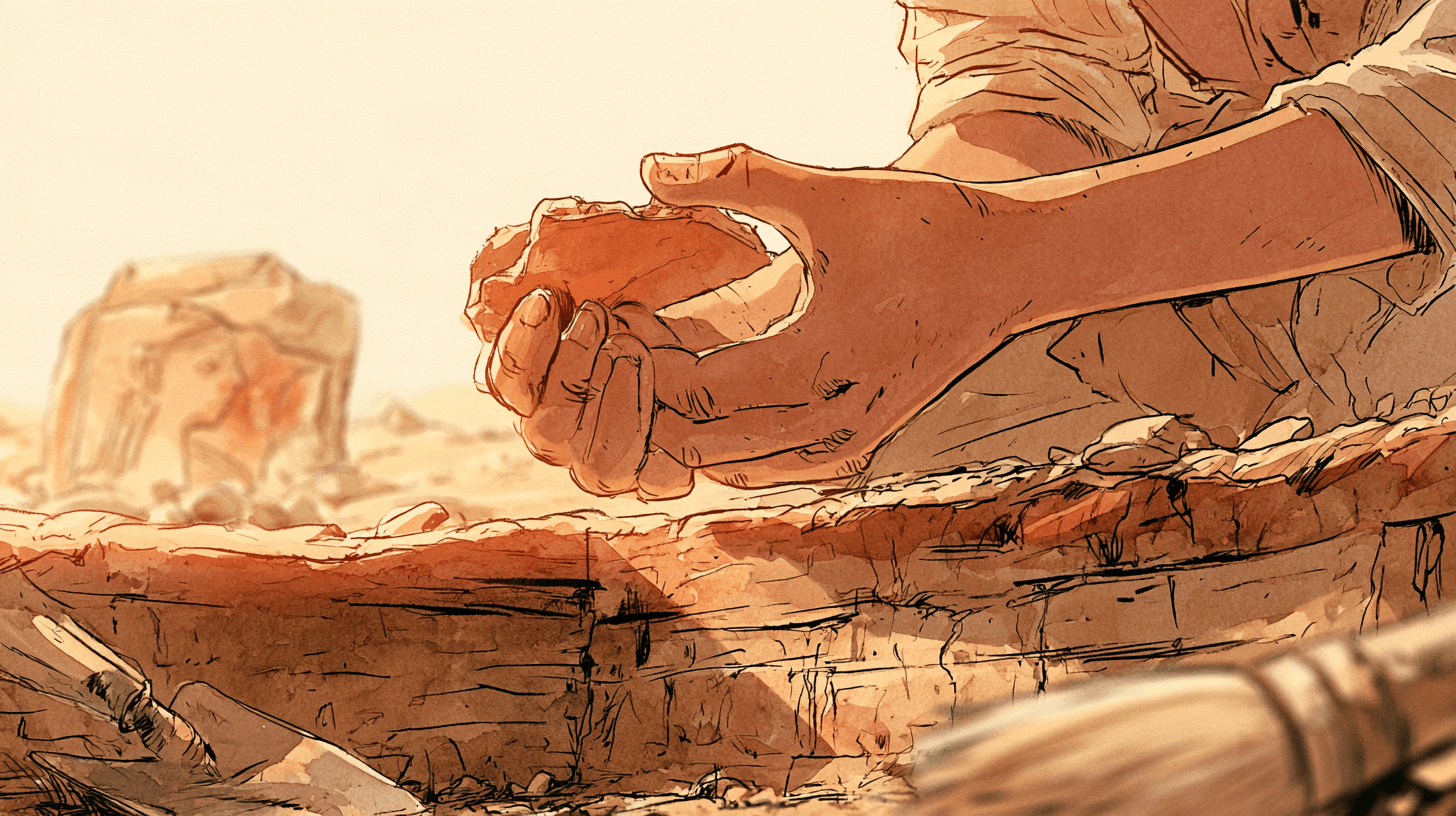
Archaeology is where the past becomes something you can hold.
Most of us first meet our past at school level textbooks, as dates, dynasties, and monuments. Archaeology is where it becomes something you can hold: a broken pot, a layer of soil, a painting, a sculpture, or anything showing that people once lived exactly where today's society stands. If that stirs something in you, this path is more open than you might think.
It starts in Class 12
No stream is compulsory. Most leading universities don't insist on a particular one, so students from arts, science or commerce can all begin. History, Geography, Political Science and Sanskrit help directly. Biology and Chemistry become useful later, as archaeology is tending to lean more on scientific studies integrating with other sciences like the life and earth. Most central universities admit through the Common University Entrance Test Undergraduate (CUET UG), while others use merit lists or their own tests.
Archaeology is not simply History
History mostly works with texts, politics and ideas. Archaeology adds excavation, survey, material culture, and fieldwork. A History degree can lead you into archaeology at the Master's stage, but the archaeology named courses are a separate track.
The course names
The names tell you how much archaeology you will actually learn:
Ancient Indian History, Culture and Archaeology (AIHC&A): ancient history with archaeology built in, taught at Banaras Hindu University (BHU), Deccan College Post-Graduate and Research Institute (Pune), Visva Bharati, and Janardan Rai Nagar Rajasthan Vidyapeeth (JRNR Vidyapeeth, Udaipur).
Ancient History, Culture and Archaeology: the same blend at the University of Allahabad.
Archaeology and Ancient History: the name at The Maharaja Sayajirao University of Baroda (MSU Baroda) and, as Ancient History and Archaeology, at the University of Madras.
Ancient Indian History and Culture: the text led version. Calcutta University keeps it separate from its Department of Archaeology, the only one in the country standing on its own.
Since names overlap, check the syllabus, and scope of the courses.
Where to go
Undergraduate
BHU offers a Bachelor of Arts (Hons) in Ancient Indian History, Culture and Archaeology through the Common University Entrance Test Undergraduate, and Visva-Bharati has a similar Bachelor of Arts (Hons) in Ancient Indian History, Culture and Archaeology. MSU Baroda is among the few that teach archaeology at this level.
Master's
BHU admits through the Common University Entrance Test Postgraduate (CUET PG). Deccan College and MSU Baroda hold their own entrance tests. Allahabad, Visva-Bharati, Calcutta and Madras run well established departments. The Indian Institute of Heritage in Noida, formerly the National Museum Institute, offers a full-time Master of Arts (MA) in Archaeology and welcomes graduates from History, Sanskrit, Anthropology, the life and earth sciences, through a written test and interaction.
After the Master's
The Archaeological Survey of India's (ASI) Institute of Archaeology in Greater Noida runs a one-year Post Graduate Diploma in Archaeology. The Tamil Nadu Institute of Archaeology and Museology offers Postgraduate Diplomas in Archaeology, Epigraphy, and Heritage Management and Museology.
What NEP 2020 changed
Earlier, a fixed three-year BA meant leaving with nothing if you stopped midway. Now a four-year degree awards a certificate after one year, a diploma after two, a BA after three and Honours after four. At postgraduate level, Calcutta University's revised rules from 2026-27 offer a one year Master's route for four year degree holders. Someone who finds archaeology late can still reach it. Not every department has moved at the same pace, so ask each one how it applies the changes.
Planning for a career
For the ASI's Young Archaeologist posts, the essential qualification is a Master's in Ancient History and Archaeology, Ancient Indian History, Culture and Archaeology, or Archaeology. There are other direct and indirect career paths that can be explored post masters.
Fieldwork is the heart of the subject, so join an excavation, volunteer at a museum, or visit archaeological sites as much as possible while you study.
(Anindya is a Doctoral Researcher in Archaeology at the Banaras Hindu University, Varanasi. He has a Master of Arts degree in Ancient Indian History, Culture, and Archaeology, and works on field projects in rock art, human-faunal interactions, and ethnography.)