
How I Sold Apple Macintosh in Delhi, 1991: Coffee, Bikes, Shoeshine and Neckties
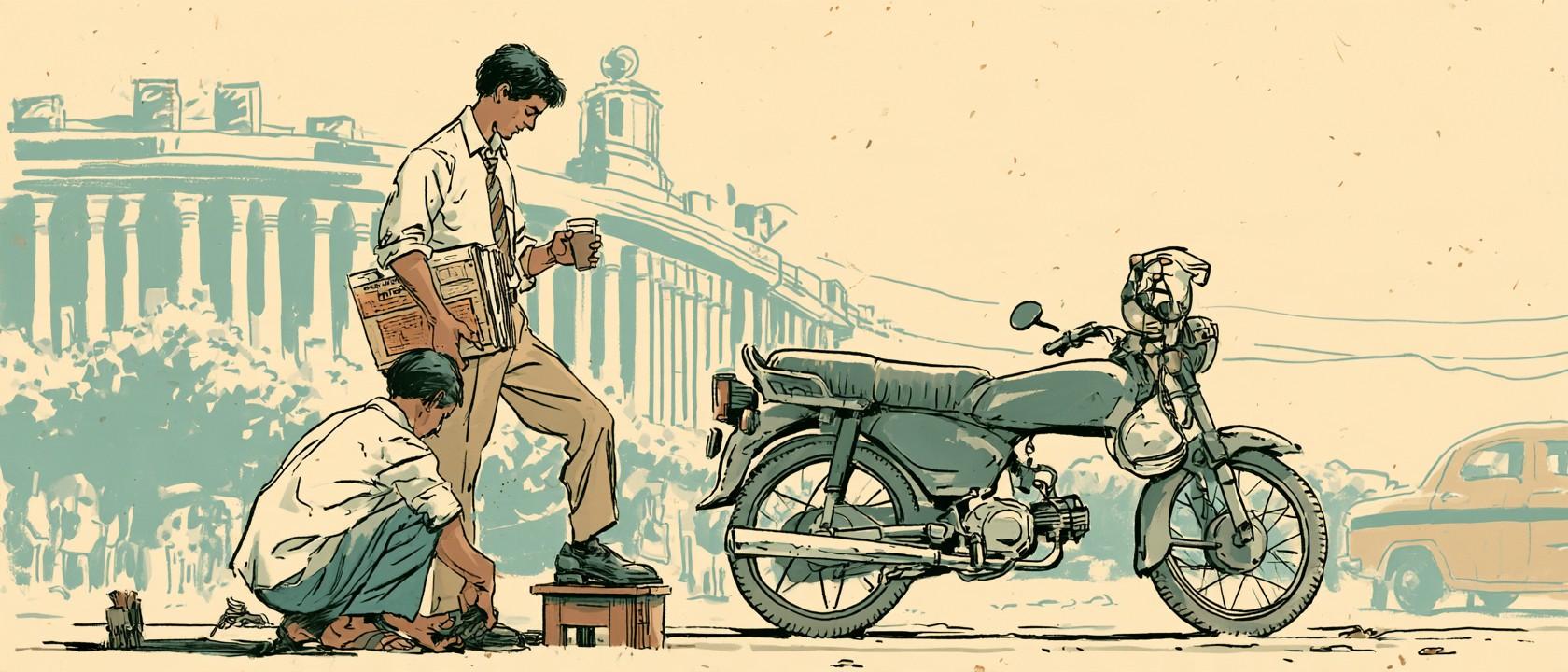
Delhi, 1991: the necktie, the directory, the bike and the shoeshine stand. Illustration created with Midjourney.
In September 1991, I was barely 21 and still pursuing my final year of graduation at Delhi University (DU) when I started working as a marketing executive selling Apple Macintosh machines. Apple Macintosh machines were very expensive, as import of PCs was heavily restricted in those days. They attracted a huge import duty; if I remember correctly, it could be as high as 270%. This was because there was a base customs duty, then an auxiliary duty, and so on. They were christened DTP (Desktop Publishing) systems so that they could be sold here freely. Marketing in those days was completely offline: no internet, only a landline and the three-volume telephone directory, which used to double up as a five-pound dumbbell for both forearms.
We would report to the office, dressed formally with a mandatory necktie, at sharp 0900 hours in south Delhi. By 0930 hours we would be given morning tea and make a few calls, as the landline was the only possible means of communication with prospective clients. After the briefing from the line manager with that day's plan, we would be free to attack the assigned territory or hit the field. Initially we were all very diligent and did a huge number of cold calls. The drill was simple: climb to the top floor of a high-rise, visit all the offices, collect visiting cards of decision makers, understand their requirements, if any, and see whether it fit the product offering we carried.
By lunchtime we would be done collecting details of at least 25-30 prospects. And then came the fun part. There was an unsaid rule: congregate at DePaul's at Janpath.
DePaul's was the marketing HQ of all sales and marketing people from all over Delhi. Centrally located in CP (Connaught Place), it had a vibe of its own. They sold cold and hot coffee along with sandwiches or cheese rolls, and apparently they still do. There were no Starbucks or CCD (Café Coffee Day) in those days; hot coffee was made in a good old espresso machine, hissing with steam. There was another place, Adarsh Store, which was my favourite as I found their coffee better than DePaul's. They sold music cassettes and CDs, and the place was always buzzing with activity. It is still there, more of a departmental/food store now. There were many small Chinese or Indian eating joints, which were always full.
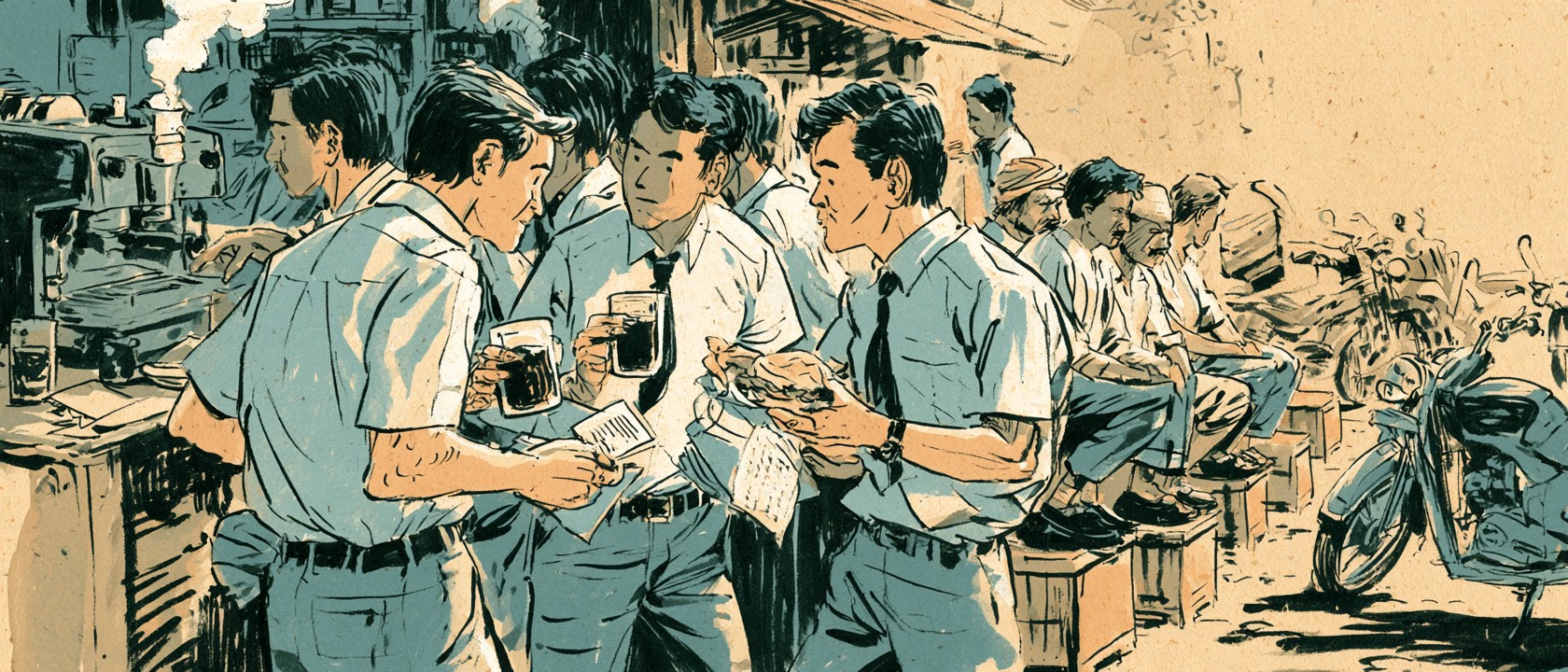
Lunchtime at DePaul's: coffee, cards and shoeshine. Illustration created with Midjourney.
Another highlight of this place was a battery of shoeshine guys, some of them legendary, all doing brisk business, mostly with sales guys selling PCs, fax machines, electronic typewriters, dot matrix printers etc. Seasoned salespeople were always seen with coffee and Gold Flake, standing with one shoe on the small wooden shoeshine stand.
Also imagine having no means of mobile communication: just seeing a familiar bike or helmet entering the foyer or parking, and the smile on your face when you saw a friend or acquaintance. Friends from different companies, selling different things to the same buildings, would pool what they had picked up that morning: who was looking to buy, who had just bought, which office had a new decision maker, which floor was not worth the climb. As you became smarter, you would realise you could trade information with other friends about prospects, cold calls etc. It became a mutually beneficial barter ecosystem of information.
It was also, let us admit, a very convenient piece of arithmetic. A few of us, each having climbed a few buildings, could walk away with the cards of all of them, and a day's tally of 20-28 prospects could be put together over a coffee. On a slack day it saved the legs. A friend going on a date, enjoying a matinee show of a movie, could show 15-20 cold calls during his debriefing in the evening. But it was not only a shortcut. It was also a genuine source of leads, as the prospect who was no use to one of us was often just right for another's product.
Delhi has come a long way in terms of having a robust public transport. In those days you could not do much without your own means of conveyance. Delhi youngsters, as a force of habit, have always wanted to control their commute on their own terms, barring the current generation, which relies on Uber, Rapido etc. Back then, mostly youngsters used their father's scooters or bought 100cc bikes like the Yamaha RX100, TVS Suzuki or Kawasaki 100RTZ. Even in the marketing field, some OGs used to travel on a Rajdoot RD350 or Royal Enfield Bullet.
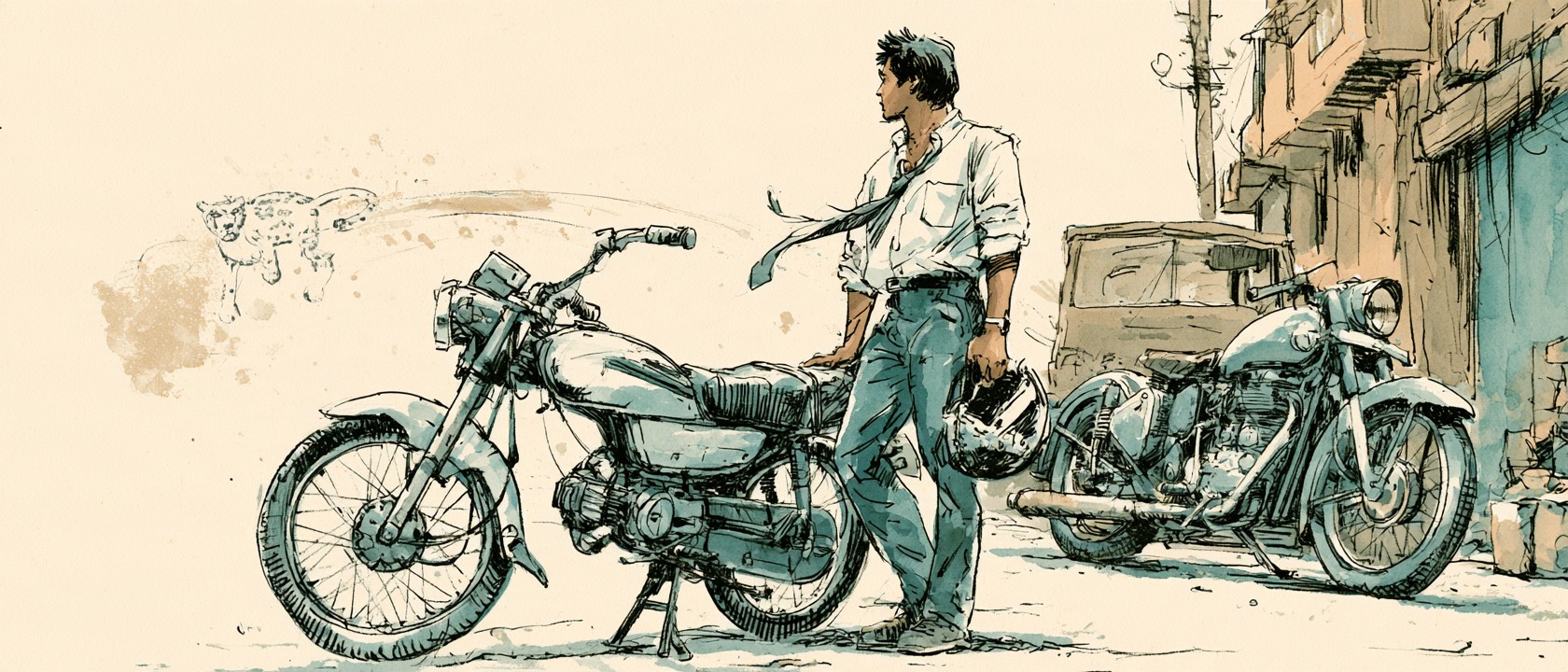
The two-stroke cheetah and the intimidating Bullet. Illustration created with Midjourney.
I was the lucky one, as I could coax my parents into buying an RX100. It was a two-stroke cheetah. The Bullet was very intimidating and intriguing at the same time. It used to have brakes on the left side and gears on the right side. Later on, when Eicher Motors acquired Enfield, they re-engineered the beast.
I am still in sales, and have spent almost all of my working life in it, in what is now called the National Capital Region (NCR). The landline became a mobile, the telephone directory became a search box, and a decision maker's name is a click away. Nobody needs to wait for a familiar helmet in the parking anymore.
Nobody trained us for any of it, either. We learned it where we stood, with a coffee in one hand and one shoe on a wooden stand.
We all yearn for the good old days, when everything was simple and more confused, as there was no easy access at your fingertips and we went along with the flow, slowly learning and adapting and forming opinions about life, about hard choices we are happy not to make…
Koi Lauta De Mere Beete Hue Din.
Vineet Sharma is a career salesperson, with over three decades in sales and marketing and the last two in strategic sales and leadership roles, across computing, IT infrastructure, telecom and enterprise technology, education and solar energy. He has spent his working life in Delhi NCR, and is still at it.
Editor’s Note: The column recounts the environment and constraints of computer and peripherals sales in Delhi in 1991. Our editorial research found government and court records that support Vineet’s recollection that imports of computers were restricted and licensed to protect Indian manufacturers (Lok Sabha, 31 July 1985; Rajya Sabha, 4 May 1989; Statement on Trade Policy, July 1991), that duties were layered, with a basic duty, an auxiliary duty and further levies, and ran very high before the 1991 reforms (Manur, The 1991 Project; Union Budget speech, 1992-93), and that desktop publishing (DTP) systems of this kind were imported under a separate category (Lok Sabha, 16 April 1990). Macintosh machines were in Indian use for desktop publishing, and Apple’s own filings describe its imports as typesetting equipment (Karnataka High Court, 1993; Delhi High Court, 1991). For the history of the policy, see R. Heeks, “Import Liberalisation and Development of Indian Computer Industry”, Economic and Political Weekly, 1995 (JSTOR).