
Archaeology: Not a Solo Subject Anymore!!
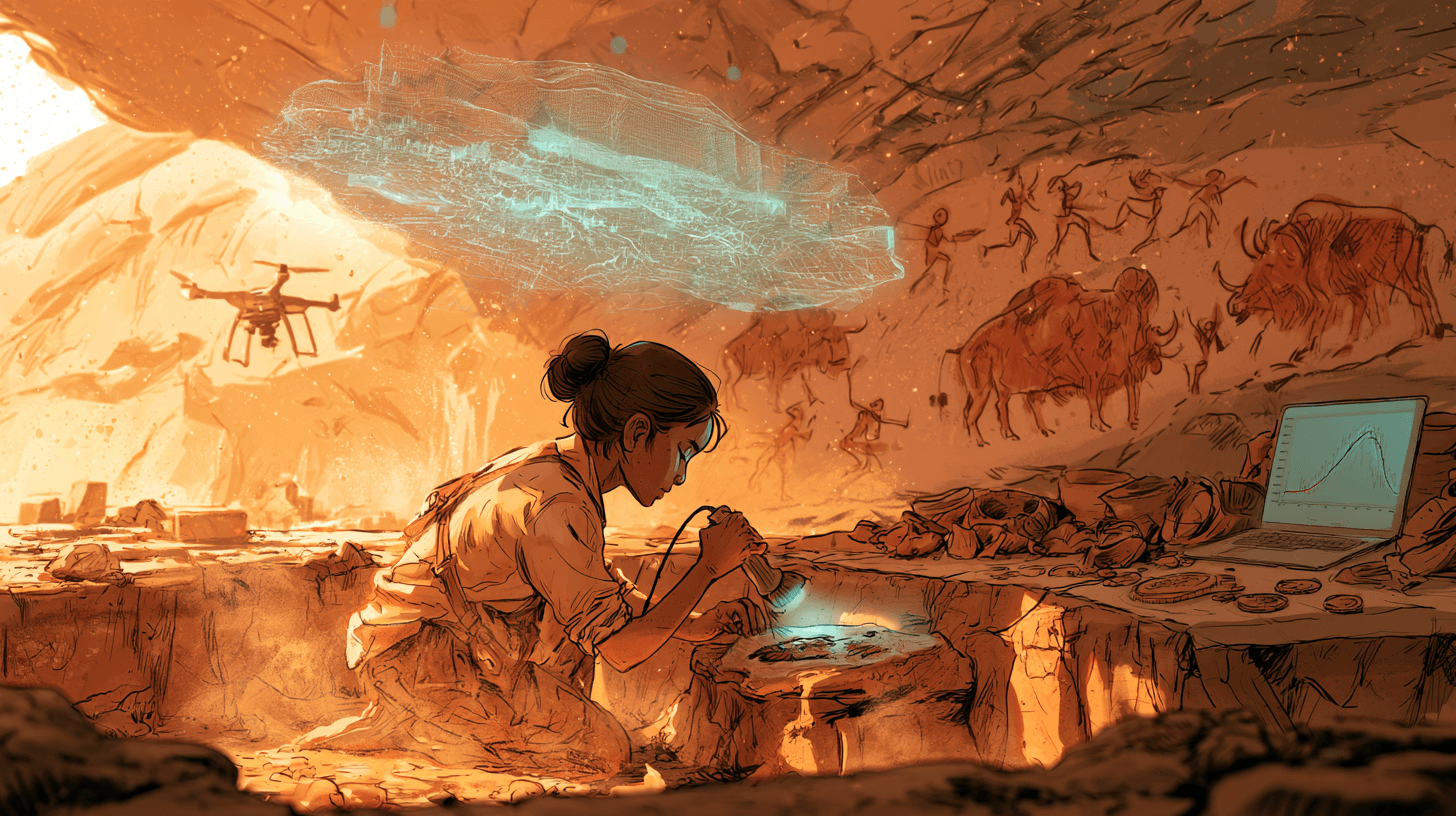
Archaeology no longer works alone: a handheld pXRF reads a painted fragment without harming it, while LiDAR and drone data map the environment.
Ask a school student what an archaeologist does and you will hear, "digs up old things." Ask a graduate where the jobs are and you will hear, "ASI or the civil services." That narrow picture is what I feel is Indian archaeology's biggest limit. A discussion with an expert is when I realised that integration for trans-disciplinary expertise in archaeological questions is still uncommon in India, even though the instruments exist. Meanwhile, chemists, coders, climate scientists and storytellers are reading the past, often without us. If you are new to this field, take that as an opening. Bring your other subject with you. Here is where you can fit.
Chemistry
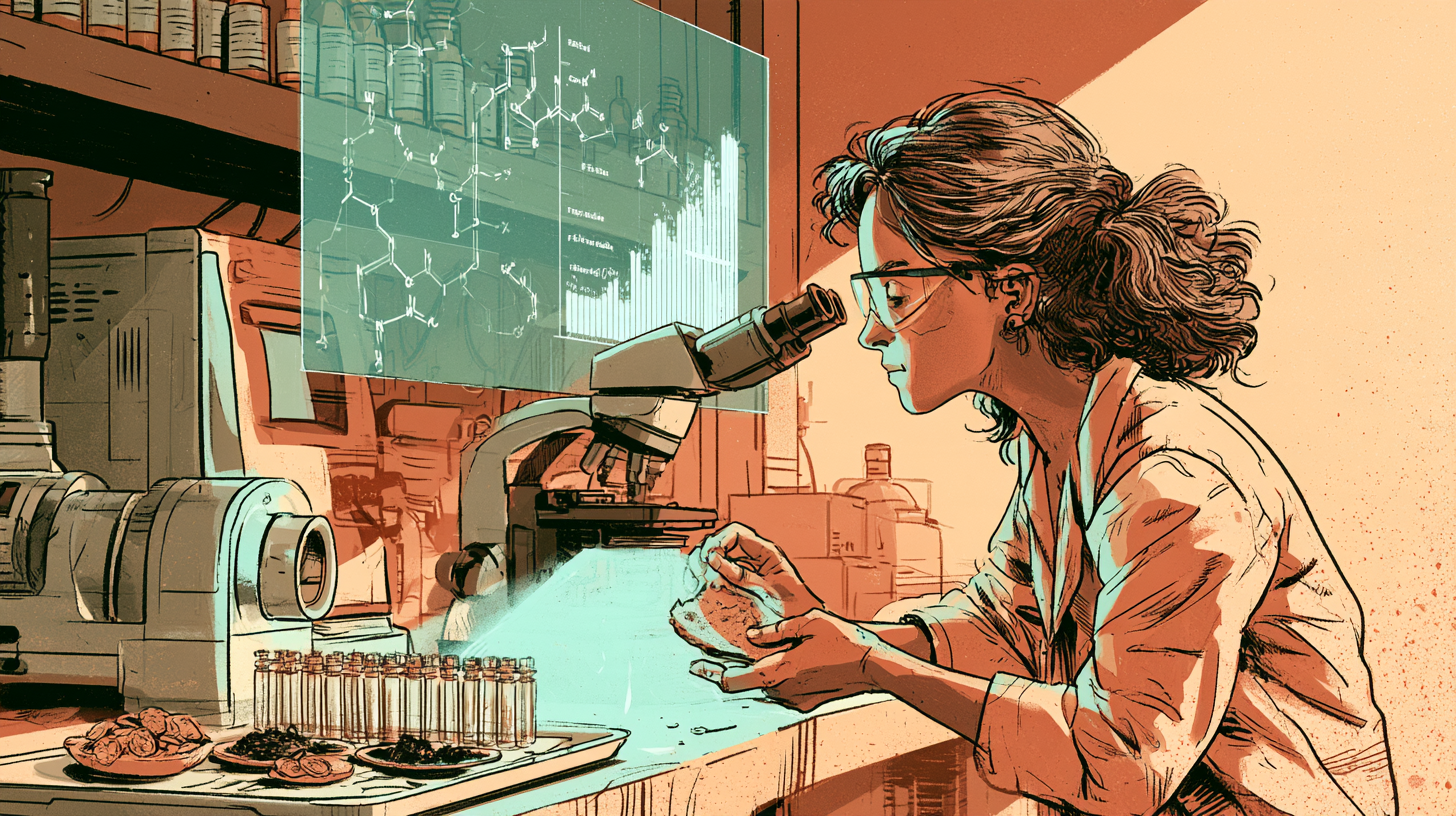
In the lab, a pottery shard yields its secrets: trapped fats and residues show what Indus kitchens cooked, without a single dig.
Chemists now try not to destroy anything. A handheld pXRF reads the elements in rock pigments, ceramics and coins without damage, and can help trace where an object was made. A portable Raman spectrometer identifies minerals by how they scatter laser light. At Bhimbetka, it found hematite, goethite, calcite and gypsum in the shelter paintings. In Indian labs, non-destructive X-ray analysis has also been used on ancient and historic coins.
Chemistry also reads old kitchens. Fats trapped in Indus pottery showed that 71% of vessels held measurable residue, mostly non-ruminant animal fat with little dairy. Isotopes in charred crops from Neolithic and Early Historic sites in East India and the Deccan add the farming story.
Emerging globally: portable instruments that combine X-ray diffraction and fluorescence, used inside caves without touching the walls.
Start with: analytical chemistry and a lab that runs these instruments.
Biology
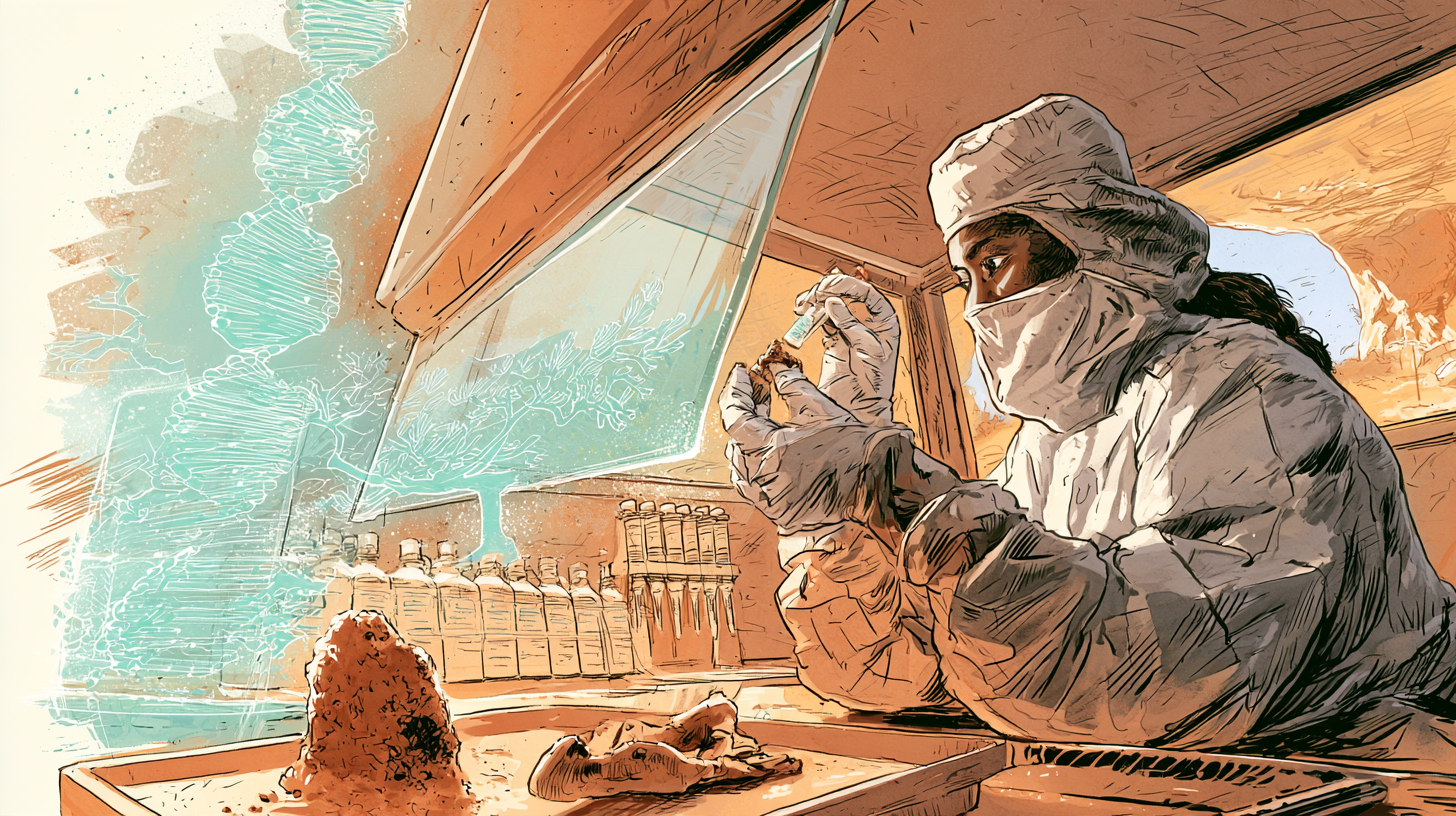
Ancient DNA/proteins are recovered in a clean lab, where molecular biology adds ancestry and diet to what the trowel finds.
Rakhigarhi's ancient DNA showed Iranian-related ancestry, but from one individual with limited coverage. India's heat degrades DNA quickly, so sampling must be careful.
Emerging globally: ancient proteins, which last longer than DNA (recovered from a 21 to 24 million-year-old rhino tooth), and DNA from cave soil, which can reveal Neanderthals where no bones survive.
Start with: molecular biology, bioarchaeology, archaeozoology, archaeobotany, and related.
Physics
Magnetometers and ground-penetrating radar see buried walls and kilns before a spade moves. At Motravulapadu, a radar survey guided excavators to fossil-rich layers, and magnetometry has been tried at Lothal, Sisupalgarh and Keeladi. Luminescence dating tells us when sediments last saw sunlight. Radar images can mislead, so geophysics guides digging and never replaces it.
Start with: physics or geophysics, plus one field season.
Mathematics
A radiocarbon date is a probability, not a fact. Bayesian models narrow it using layer order, but even popular software can distort results. Keeladi's 580 BCE date belongs to one tested sample, not the whole site. Honest statistics settle disputes better than loud claims. Better models will be useful in clearing the clout around the perfect dates.
Start with: statistics and R or Python.
Computer Science
LiDAR revealed 61,480 additional Maya structures under forest, yet covered only about 10% of the reserve. AI trained on satellite images of Mesopotamia finds sites with about 80% accuracy, still needing expert checking. India is catching up: ISRO has begun a LiDAR survey at Rajgir, and Lakkundi is being mapped without excavation.
Start with: GIS, Python and spatial data.
Geology, Geochemistry and Environmental Science
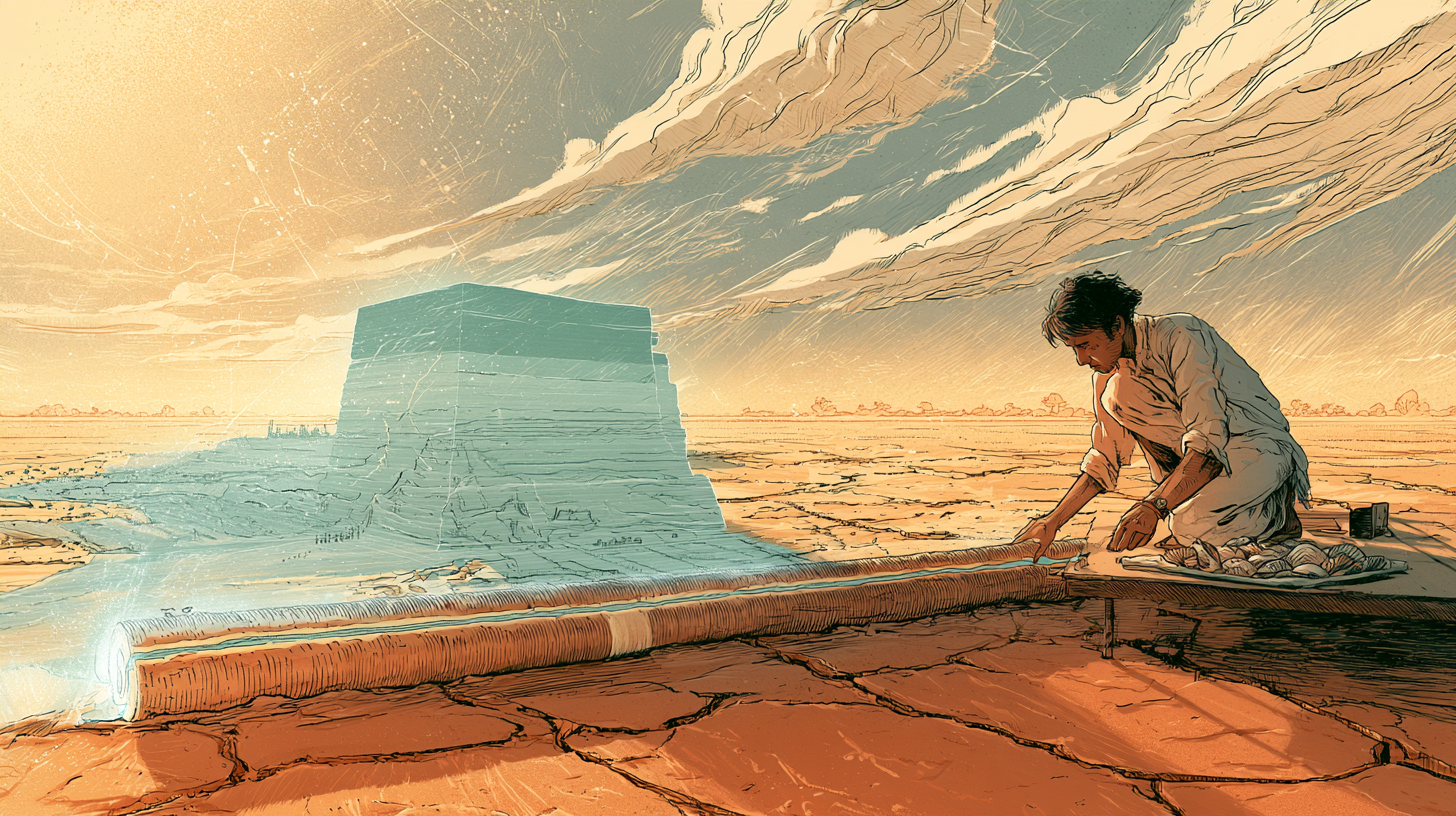
Lakebed sediment core and a ring of shells hold the climate record, linking weakening monsoons to the fate of ancient towns.
The ground is the archive, and lake mud and sea-floor shells are climate diaries. The large Maya site in Guatemala's Mirador-Calakmul basin was reported by geologists. Volcanic ash layers (Youngest Toba Tuff) helped date finds at Motravulapadu. Geochemistry of Indus delta shells links weaker monsoon rain around 4,200 years ago to the Harappan urban decline, though the scale of that event is debated. Lake sediments from Kotla Dahar suggest rural Late Harappan communities declined as summer rains weakened.
Start with: earth sciences, geochemistry or environmental science.
Visual Art
Drawing and 3D modelling turn fragments into pictures. IIT Hyderabad's lab builds drone and LiDAR models, AR and VR experiences and illustrated renderings. A VR project recreated medieval Mandu from accounts and photographs. Every reconstruction is an argument, so mark what is evidence and what is imagination. It's not just adapting the new age tech, but also goes down to interpret various artistic activities of our history: from prehistoric rock paintings to sculptures, to tools and what not. The motive and thought behind art will lead to better interpretation of the ancient human's artistic thought, cognition, and intention.
Start with: illustration, 3D modelling or film.
Performing Arts
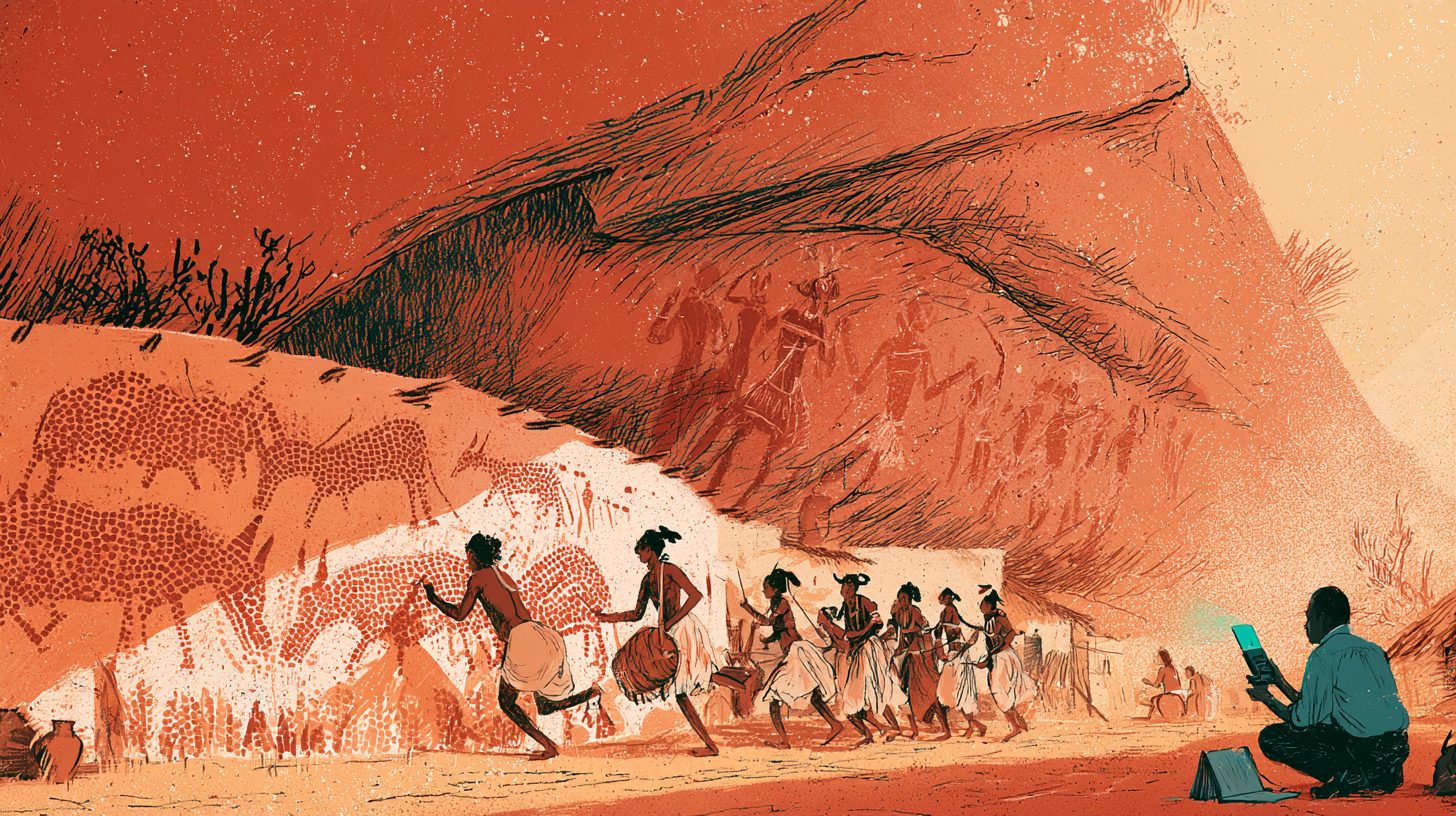
When opportunity presents itself to observe traditional music and dance in prehistoric context, it enables an ethnomusicologist to ask better questions of the old images.
Living traditions help us ask better questions of old images. Bhimbetka's paintings run from prehistory to the historic period while native Gond and other ethnic communities still keep painting, music, dance and ritual practices that connect to that long record. Studied with consent and humility, they sharpen interpretation. India has documented oral traditions and festivals in over 6 lakh villages. Elsewhere, theatre has carried excavation findings to local audiences, as in Malaysia's Kedah Tua project. We barely find a documented Indian equivalent, which makes this a gap worth filling.
Start with: ethnomusicology, folk theatre, anthropology or documentary film.
Law
The Antiquities and Art Treasures Act, 1972 requires registration and restricts export. India retrieved 610 stolen antiquities between 2020 and 2024, mostly from the US, and a Parliamentary Committee has proposed a Heritage Repatriation Fund. Each return depends on provenance research.
Start with: law, then heritage and cultural property law.
Museology
Delhi's Indian Institute of Heritage offers MA programmes in museology, conservation and archaeological science. Vadnagar's museum has a 4,000 sq m open excavation visitors can walk beside, and Keeladi's museum opened in 2023.
Start with: museology, conservation science or exhibition design.
Heritage Management
The ASI protects 3,686 monuments, and 30 MoUs have been signed under Adopt a Heritage 2.0. In the UK, commercial archaeology employed about 4,375 people and was valued at £224 million in 2019-20, driven by planning rules. India's equivalent market is still forming.
Start with: heritage management, planning law and project management.
A thought for newcomers
Learn the field first, then pick one partner subject and learn its language. Be sceptical of spectacular results, and remember that someone must explain the past to the public. The trowel is not going away, but it is now one tool amongst many.
Editor's Note: Illustrations have been generated through MidJourney.
(Anindya Sanyal is a Doctoral Researcher in Archaeology at the Banaras Hindu University, Varanasi. He has a Master of Arts degree in Ancient Indian History, Culture, and Archaeology, and works on field projects in rock art, human-faunal interactions, and ethnography.)